6 November 2026 · 7 min read
Make Iced Matcha Latte at Home: Starbucks Style
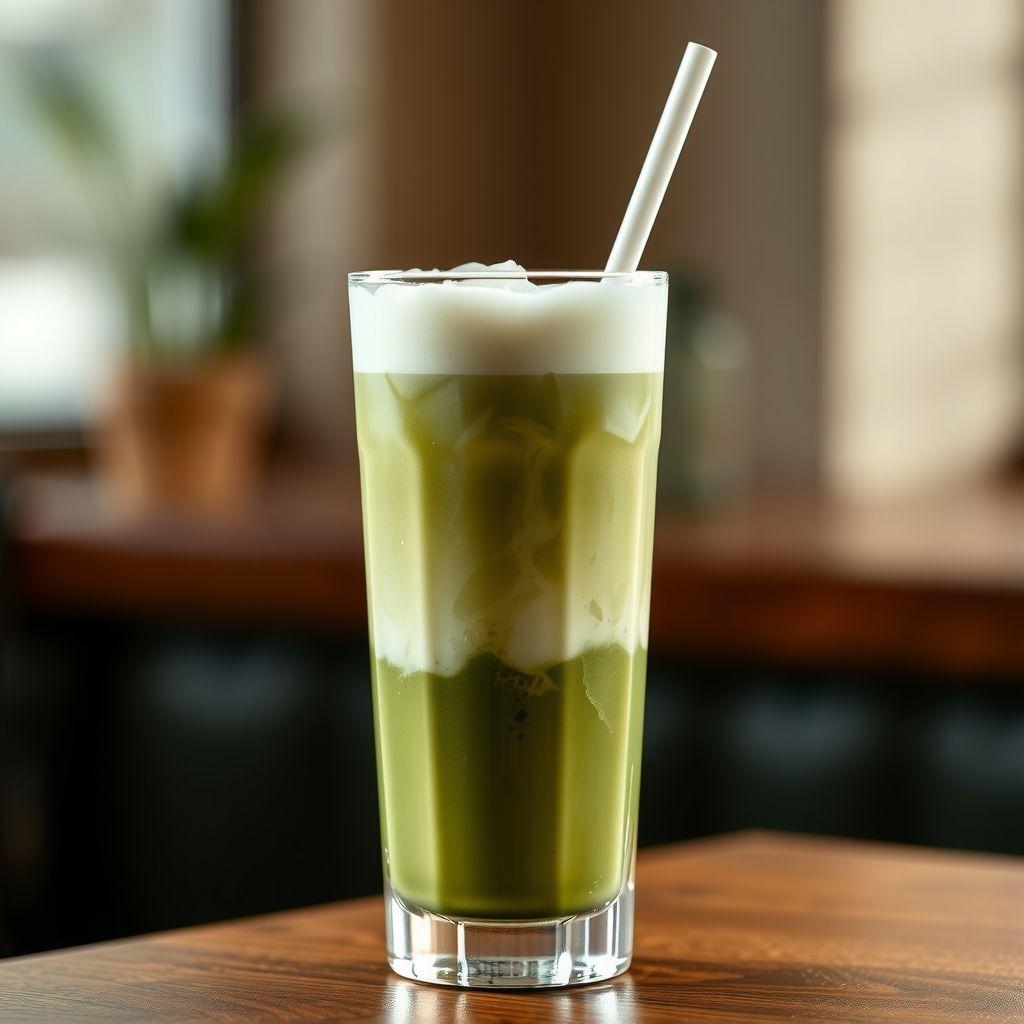
Make an Iced Matcha Latte Like Your Favorite Cafe
You can make a creamy, sweet iced matcha latte at home that tastes just like the popular cafe versions. The secret is in the right matcha, the correct water temperature, and balancing your milk and sweetener choices. This guide helps you achieve that familiar taste without leaving your kitchen.
The Core Recipe: Your Iced Matcha Latte Formula
Making an iced matcha latte is simple once you have the right ingredients and tools. Here is the basic formula to get you started:
- Prepare your matcha: Sift 2 grams of matcha powder into a matcha bowl. Add 60 milliliters of water heated to 70-80 C. Whisk vigorously in a "W" or "M" motion for 30-60 seconds until a smooth, frothy liquid forms with no lumps.
- Sweeten the matcha: Stir in 15-30 milliliters of simple syrup or vanilla syrup directly into the whisked matcha. Adjust to your preferred sweetness.
- Prepare your serving glass: Fill a tall glass with ice cubes.
- Add milk: Pour 180-240 milliliters of your chosen cold milk over the ice.
- Combine: Gently pour the sweetened matcha mixture over the milk. This creates a visually appealing layered effect.
- Serve: Stir lightly before drinking, or enjoy the layers as they slowly mix.
This recipe provides a strong matcha flavor that stands up to milk and sweetness, typical of cafe lattes. Adjust the matcha quantity for a weaker or stronger drink.
Choosing Your Matcha for an Iced Latte
The type of matcha you choose significantly impacts the final taste of your iced latte. While "ceremonial grade" matcha is often recommended for traditional preparation, an organic matcha powder can be an excellent choice for lattes, especially if you prefer a bolder flavor.
When you add milk and sweeteners, the delicate notes of a high-end ceremonial matcha can get lost. A robust organic matcha powder often provides a more pronounced matcha flavor that cuts through the creaminess of milk and the sweetness of syrups.
MIRUKII offers options that suit different preferences:
- For a vibrant green color and a balanced flavor that can still shine in a latte, consider MIRUKII's Ceremonial Matcha 100g. It costs 54.95 USD and offers a smooth, less astringent taste.
- If you want a stronger, more assertive matcha presence in your latte, MIRUKII's Organic Matcha Powder 250g is a good choice. Priced at 59.95 USD, it provides more powder for frequent latte making and a distinct flavor that stands up well to other ingredients.
Do not use matcha specifically labeled as "culinary" if you can avoid it. These often have a duller color and a more bitter, less pleasant taste that will make your latte less enjoyable. A good quality organic matcha powder, even if not ceremonial grade, should still be vibrant green and have a fresh, grassy aroma.
Sweeteners and Syrups: Reaching That Cafe Taste
Most cafe iced matcha lattes are sweetened. This sweetness is key to balancing matcha's natural earthy and sometimes slightly bitter notes. Simply adding sugar rarely achieves the same result as a well-dissolved syrup.
Simple Syrup
Simple syrup is your best friend for cafe-style drinks. It dissolves instantly into cold or warm liquids, ensuring even sweetness throughout your latte. To make it:
- Combine equal parts granulated sugar and hot water in a saucepan. For example, 200 grams of sugar and 200 milliliters of water.
- Heat gently, stirring until the sugar completely dissolves. Do not boil.
- Remove from heat and let it cool completely.
- Store in an airtight container in the refrigerator for up to several weeks.
Start with 15 milliliters of simple syrup per latte and add more to taste. Many popular cafe versions use 30 milliliters or more per serving.
Vanilla Syrup
Vanilla syrup is another common addition, offering a familiar aroma that complements matcha well. You can buy pre-made vanilla syrup or add a few drops of vanilla extract to your homemade simple syrup while it's cooling.
The goal is to find a balance. Too little sweetener and the matcha might taste too earthy or astringent for some. Too much, and you lose the matcha flavor entirely. Experiment with different amounts until you find your sweet spot.
The Best Milk for a Creamy Iced Matcha Latte
The milk you choose dramatically impacts the texture, richness, and overall flavor of your iced matcha latte. Cafes often use specific milks to achieve a creamy, satisfying drink. You can replicate this at home.
Dairy Milk
- Whole Milk: This is a classic choice for a reason. Whole milk provides a rich, creamy texture and a neutral flavor that allows the matcha to shine. It creates a velvety mouthfeel that many find appealing.
- 2% Milk: A lighter option than whole milk, 2% still offers a good balance of creaminess without being too heavy. It's a popular choice for those who want less fat but still desire some body in their latte.
Non-Dairy Milk Alternatives
Non-dairy milks have improved significantly and can create excellent iced matcha lattes. Pay attention to the "barista blend" versions, as they are formulated to be creamier and less prone to separation.
- Oat Milk: Often considered the gold standard for non-dairy lattes. Oat milk is naturally sweet and incredibly creamy, mimicking the texture of whole dairy milk very well. It's an excellent choice for a smooth, rich iced matcha latte.
- Almond Milk: A lighter option, almond milk can work if you prefer a less creamy drink. Opt for unsweetened varieties to control the sugar content yourself. Be aware that some almond milks can have a slightly watery texture or nutty flavor that may compete with the matcha.
- Soy Milk: Another popular choice, soy milk offers a creamy texture and a good protein content. Like almond milk, choose unsweetened options to avoid excessive sugar and to better control the flavor profile.
Experiment with different milks to find what you like best. The interaction between matcha, sweetener, and milk is personal. A good iced matcha latte should be balanced, with no single element overpowering the others.
Essential Tools for Your Home Matcha Bar
While you can make matcha with minimal tools, certain items make the process easier, more enjoyable, and yield a better result, especially for a smooth, lump-free latte.
- Matcha Whisk (Chasen): A bamboo whisk is the traditional and most effective tool for dissolving matcha powder and creating a frothy layer. Its fine bristles break up clumps better than a spoon or fork. MIRUKII offers The Vintage Bamboo Chasen, priced at 10.95 USD, as a standalone option.
- Matcha Bowl (Chawan): A wide, shallow bowl allows for easy whisking. The design prevents spillage and helps create a good froth. MIRUKII has several options, including The Spouted Matcha Bowl for 27.95 USD, which makes pouring easier, or The Ceramic Bowl & Whisk Duo for 13.95 USD.
- Whisk Stand (Kusenaoshi): A ceramic stand helps maintain the shape of your bamboo whisk and allows it to air dry, extending its lifespan. MIRUKII sells The Ceramic Whisk Stand for 8.95 USD.
- Matcha Sifter: Sifting your matcha powder before whisking is a crucial step. It breaks up any small clumps that form due to moisture, ensuring a smoother, lump-free latte.
If you're starting fresh, a set can provide everything you need. MIRUKII offers several comprehensive options:
- The Nine-Piece Matcha Set for 39.95 USD.
- The Bamboo Preparation Set for 54.95 USD.
- The Cherry Blossom Gradient Set for 18.95 USD.
- The Complete Crazed-Glaze Set for 44.95 USD.
- The Kiln-Change Glaze Set for 18.95 USD.
- The Cherry Blossom Bowl & Stand for 23.95 USD.
For a simpler, more budget-friendly start, a good quality bamboo whisk and a wide bowl are the most important investments. You can use a fine mesh strainer as a sifter in a pinch.
Troubleshooting Your Iced Matcha Latte
Even with the right recipe, you might encounter issues. Here are common problems and how to fix them:
Lumps in Your Matcha
This is the most common issue. Matcha powder is very fine and can clump easily.
Solution: Always sift your matcha powder before adding water. Use a dedicated matcha sifter or a fine mesh tea strainer. Whisk vigorously with a bamboo whisk using a "W" or "M" motion, not circular, to fully dissolve the powder.
Bitter Taste
If your matcha latte tastes bitter, several factors could be at play.
Solution:
- Water Temperature: Never use boiling water. Water that is too hot will scorch the matcha and bring out bitterness. Aim for 70-80 C.
- Matcha Quality: Lower quality matcha can inherently be more bitter. Ensure you are using a good organic matcha powder or ceremonial grade.
- Insufficient Sweetener: For a cafe-style latte, you often need more sweetener than you think to balance the matcha's natural notes. Increase your simple syrup gradually.
Weak or Watery Flavor
If your latte lacks punch, it might be too diluted or not strong enough.
Solution:
- Too Much Milk/Ice: Reduce the amount of milk or ice, or use more matcha powder (e.g., 3-4 grams instead of 2 grams).
- Not Enough Matcha: Ensure you are using at least 2 grams of matcha per serving. For a stronger taste, increase it to 3 grams.
Matcha Separating or Settling Too Quickly
Matcha is a suspension, not a solution, so some settling is normal, but excessive separation can be fixed.
Solution: Whisk your matcha thoroughly to create a stable suspension. Using a thicker milk, like whole dairy milk or oat milk, can also help keep the matcha suspended longer. Stir gently before each sip.
Making a great iced matcha latte at home is a skill that improves with practice. By focusing on quality ingredients, proper technique, and adjusting to your taste, you can consistently create a delicious, cafe-quality drink.
Common questions
What kind of matcha should I use for an iced latte?+
For a sweet iced latte, a high-quality organic matcha powder works well. It offers a strong matcha flavor that stands up to milk and sweeteners without becoming bitter.
How do I get my iced matcha latte to taste sweet like a cafe?+
Use a simple syrup or a flavored syrup like vanilla. The key is to add enough sweetness to balance the matcha's flavor, often more than you might expect for a plain tea.
What's the best milk for an iced matcha latte?+
Oat milk and whole dairy milk are excellent choices for a creamy texture. Oat milk provides a natural sweetness and thick consistency, while whole milk offers a rich, smooth mouthfeel.
Can I make an iced matcha latte without a whisk?+
Yes, you can. While a bamboo whisk is best for smoothness, you can use a small electric frother, a fork, or even shake the matcha and water vigorously in a sealed jar to dissolve the powder.
More matcha guides
The matcha tools for this ritual
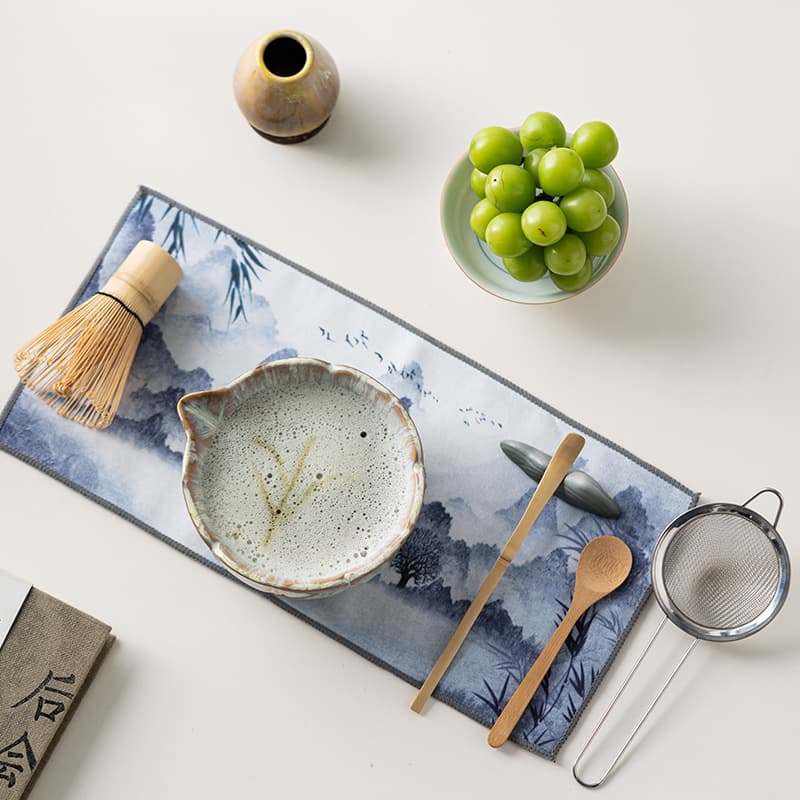
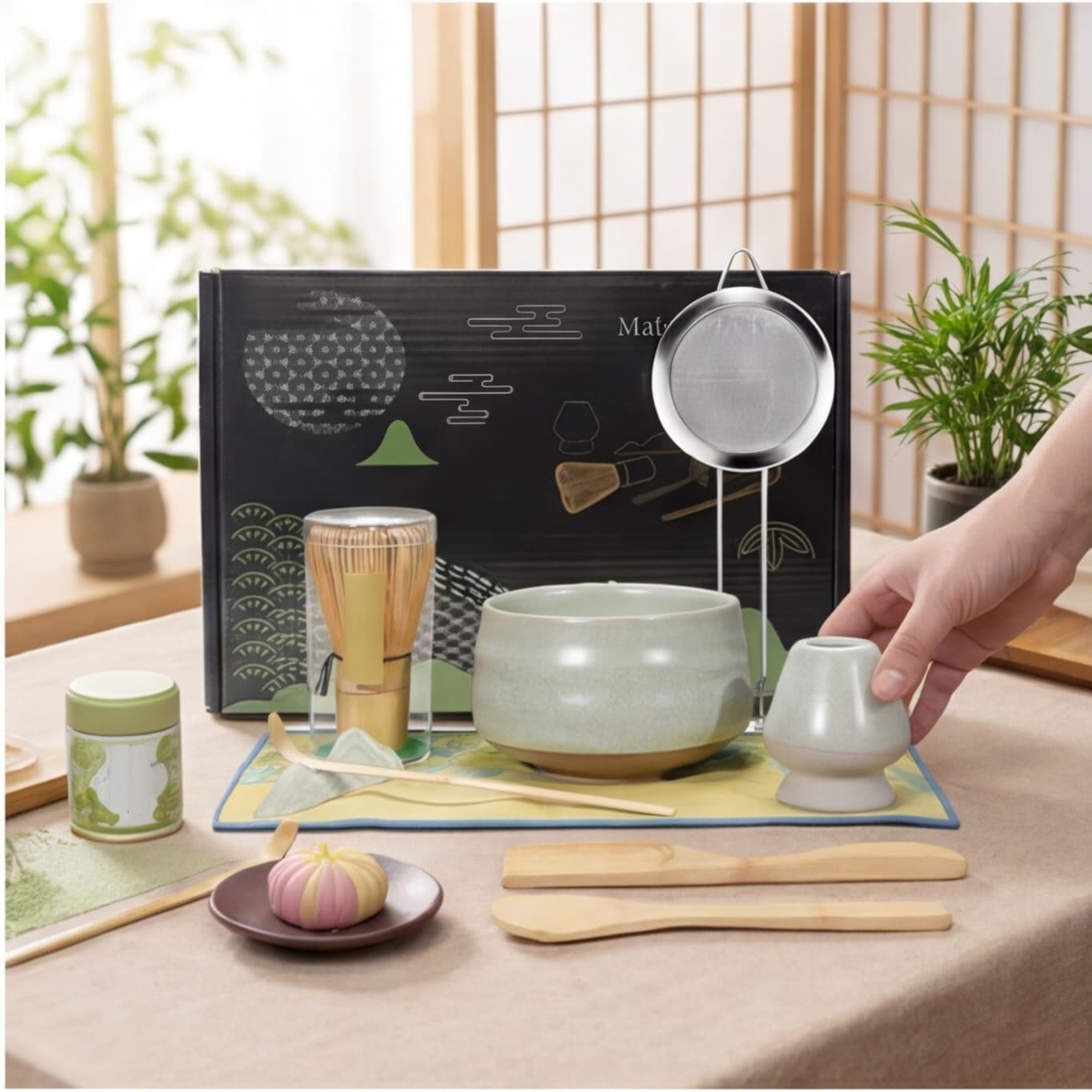
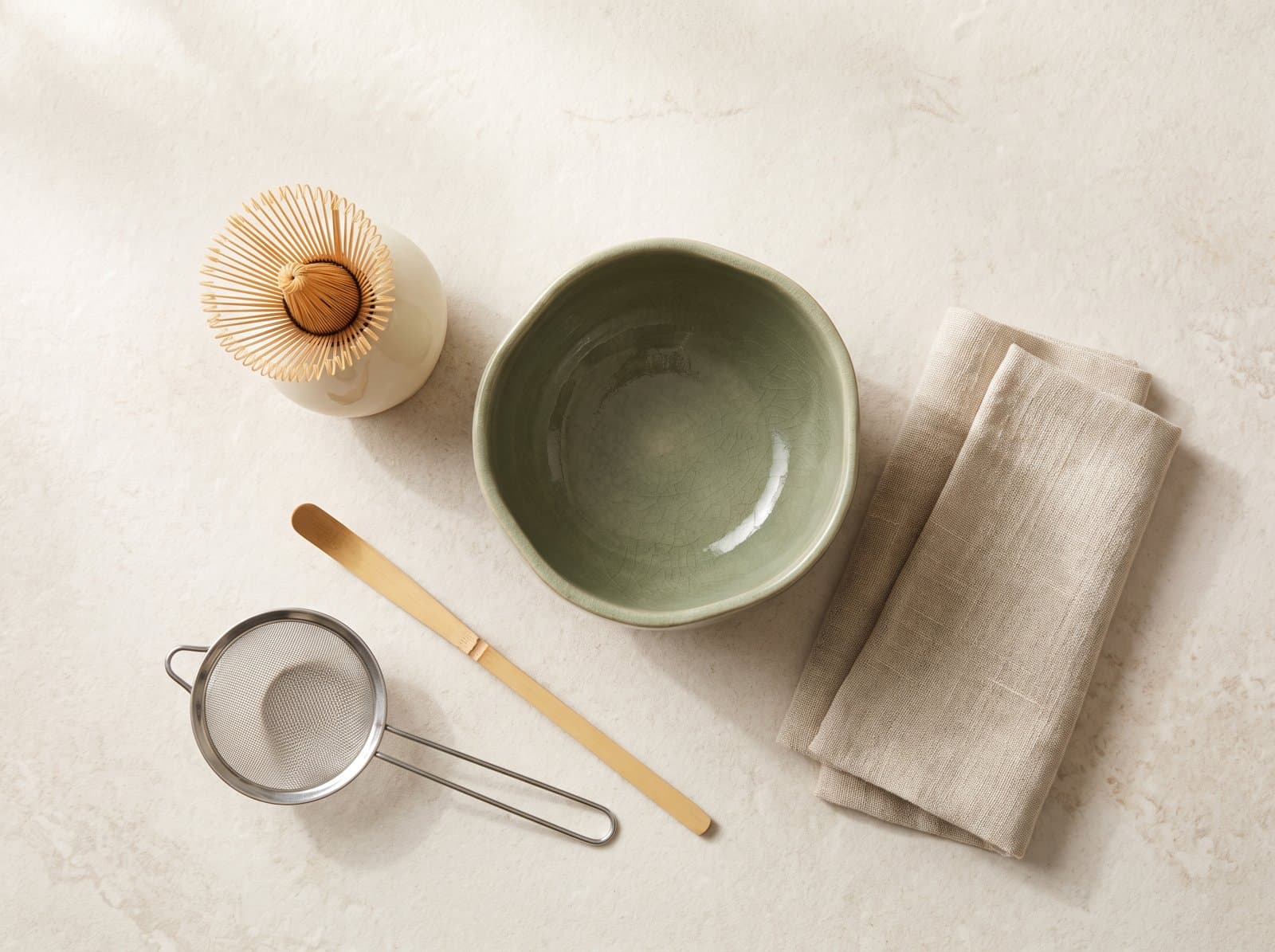
Everything the matcha ritual asks for.
Bowl, whisk, scoop, sifter, and rest — photographed exactly as they arrive.