19 August 2026 · 5 min read
Why is my matcha bitter (or clumpy)? The four usual suspects
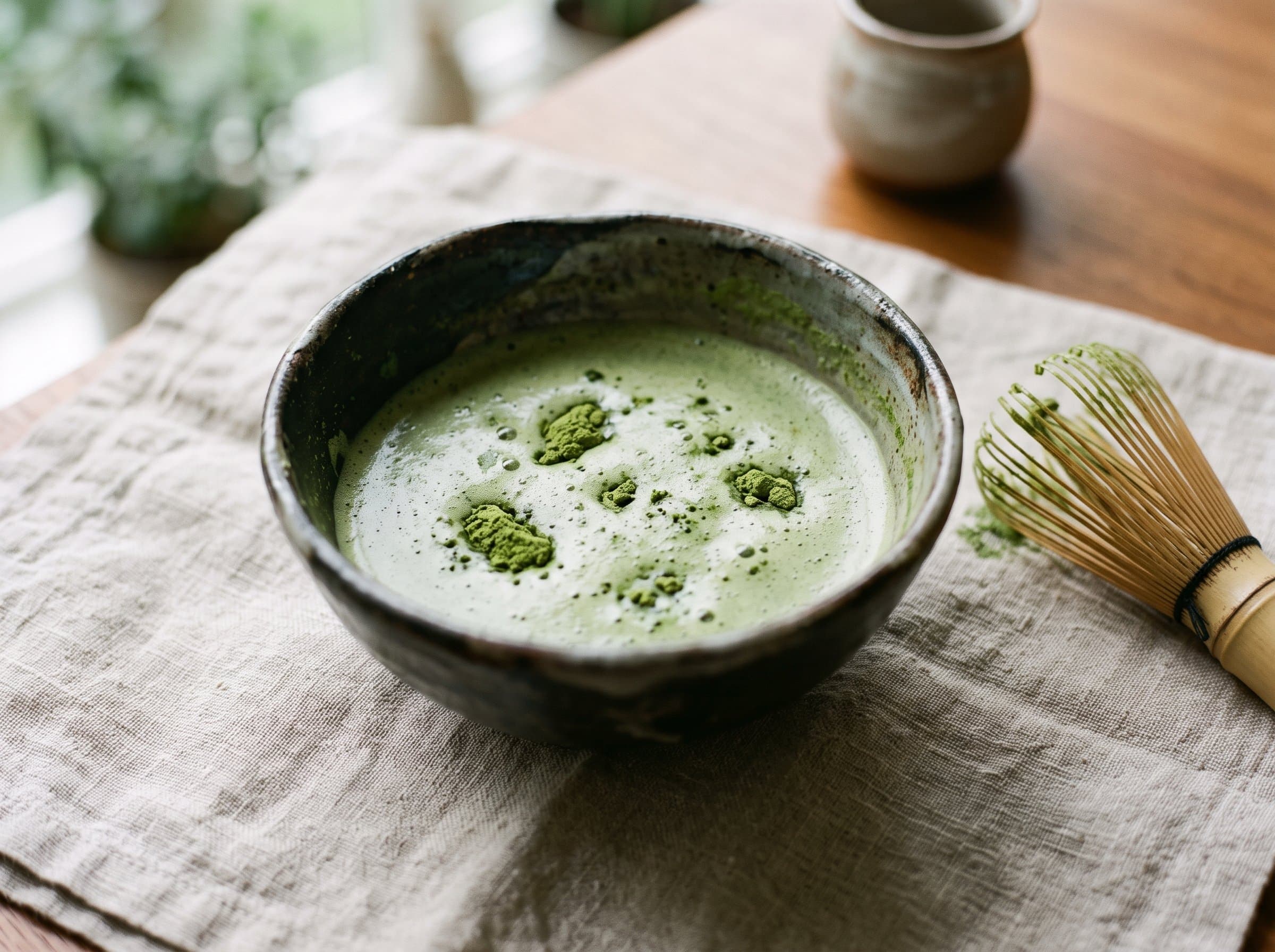
You bought the good powder, you followed the video, and the bowl tastes like ash — or worse, it's gritty with little islands of dry powder. Before you blame the matcha, know this: a bad bowl almost always traces back to one of four small things, and all four are fixable tonight.
If it's bitter
The water was too hot. This is the cause nine times out of ten. Water straight off the boil — 100°C — scorches the powder and releases a flood of bitter tannins in the first second. Let the kettle rest for two minutes, or splash a little cool water into the bowl first. You're aiming for 80°C: steaming, not boiling. If your matcha has been bitter every single time, this is almost certainly why.
The powder is culinary grade. If 80-degree water still tastes sharp, check the tin. Culinary matcha is made for lattes and baking — it has a stronger, more bitter backbone built to survive milk and sugar. Drunk straight with water, it will always taste harsh. That's not a defect; it's just the wrong tool for a straight bowl.
If it's clumpy or gritty
You skipped the sift. Matcha is ground finer than flour and clumps the moment it meets the humidity in your kitchen. The whisk can't break those clumps — it just pushes them around. Ten seconds through a fine mesh sifter before any water touches the powder is the entire fix. If you take one habit from this article, take this one.
If it's flat and won't foam
You're stirring, not whisking. Foam needs the liquid cut fast by many fine prongs — a quick, loose W-motion from the wrist for about fifteen seconds, the whisk floating rather than scrubbing the base. A slow circular stir, or a spoon, mixes without aerating. The foam isn't decoration; it's what carries the aroma.
Still not right?
Then it's the powder itself — old, or poorly stored. Matcha fades fast once opened: keep it sealed, away from light and heat, and use it within a couple of months. A tin that's gone dull and olive won't foam or sweeten no matter what you do to it.
The short version: cool the water, sift the powder, whisk fast and loose. Fix those three and the fourth almost never comes up. Tomorrow's bowl will taste like the one that made you want matcha in the first place.
Common questions
Why does my matcha taste bitter?+
Almost always water temperature. Water above 85°C scorches the powder and releases bitter tannins instantly. Let the kettle rest two minutes after boiling, aiming for 80°C. If it's still bitter, the powder is likely culinary grade — made for lattes, not straight bowls.
Why is my matcha clumpy?+
You skipped the sift. Matcha clumps the moment it meets humid air, and the whisk can't break the clumps once they're wet. Ten seconds through a fine mesh sifter before adding water fixes it completely.
Why won't my matcha foam?+
You're stirring instead of whisking. Foam needs a fast, loose W-motion from the wrist for about fifteen seconds with the whisk floating on the surface. A spoon or slow circular stir mixes without aerating. If technique is right and it still won't foam, the powder is old or low grade.
Does matcha go bad?+
It doesn't spoil, but it fades fast once opened — the vivid green dulls to olive and the sweetness goes with it. Keep it sealed, away from light and heat, and use it within two months of opening.
More matcha guides
The matcha tools for this ritual
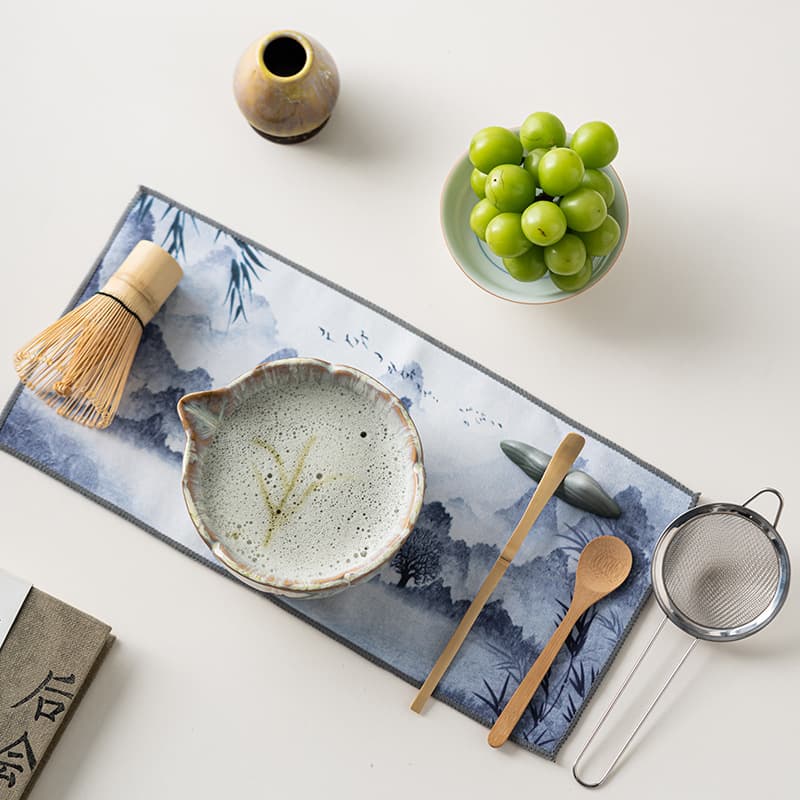
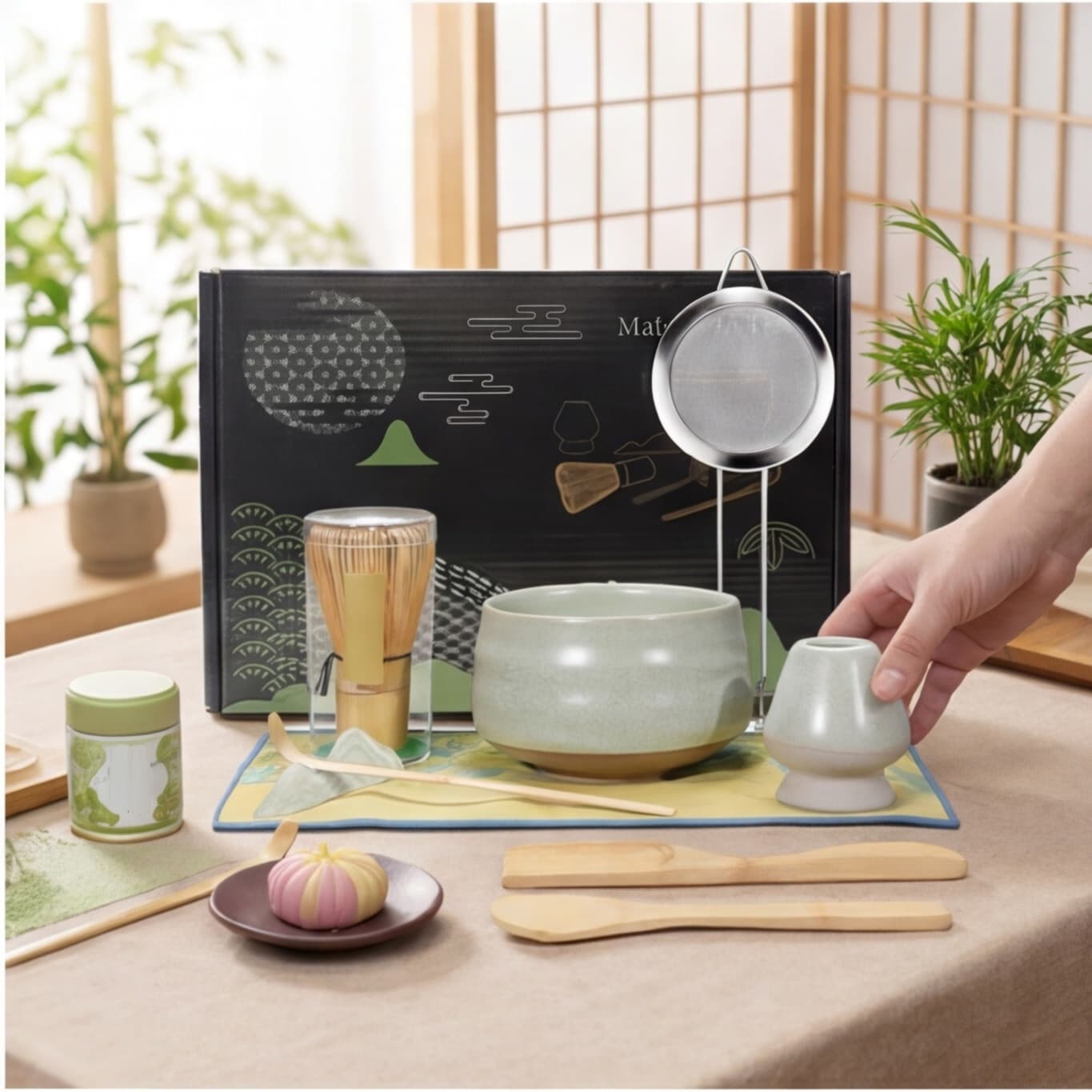
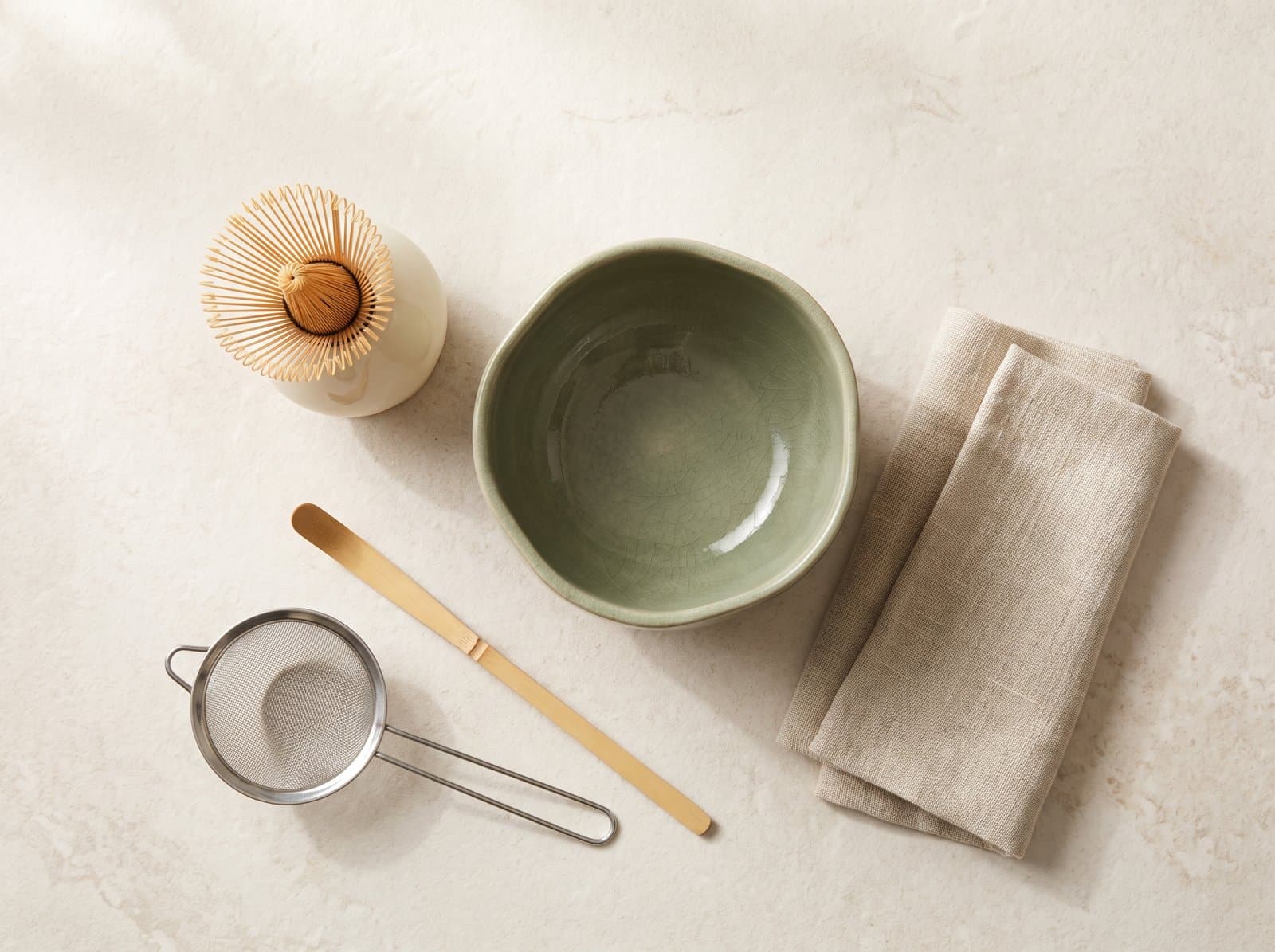
Everything the matcha ritual asks for.
Bowl, whisk, scoop, sifter, and rest — photographed exactly as they arrive.