30 October 2026 · 3 min read
How much caffeine is in matcha, compared with coffee
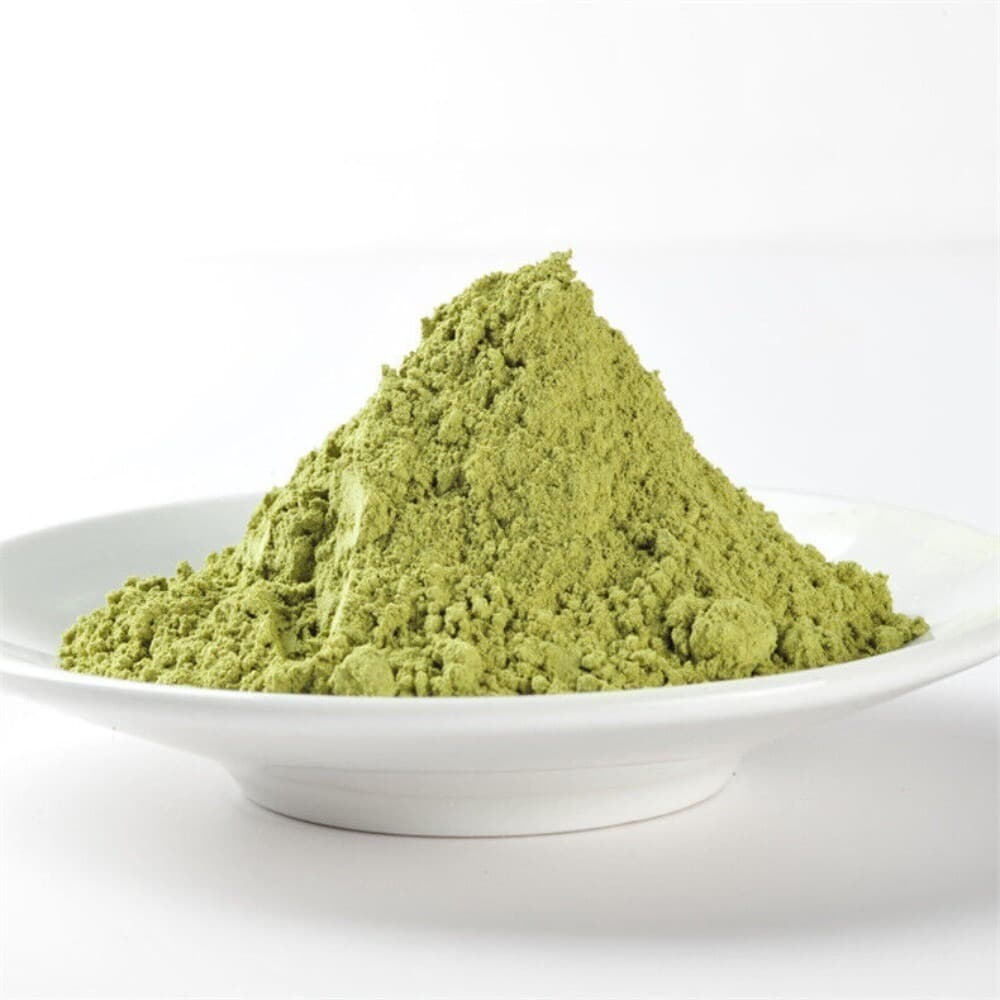
Matcha contains caffeine, and that is one of the reasons people reach for it in the morning. Health publishers such as Healthline and Medical News Today put matcha at 19 to 44 mg of caffeine per gram. That range is wide, so the amount you actually drink depends on how much powder you use, the grade, and how you make it.
What a teaspoon contains
A standard bowl is 2 g of matcha, about one level teaspoon. Multiply that by the per-gram range and a bowl comes to roughly 38 to 88 mg of caffeine. A heaped spoon holds more, and a typical serving of 2 to 4 g, which is one half to one teaspoon, gives about 38 to 176 mg, according to Healthline's figures. Treat those numbers as a guide. No single figure applies to every tin, because the leaves and the grade change the result.
How it compares with coffee
Gram for gram, matcha is more concentrated than coffee. Coffee beans contain about 10 to 12 mg of caffeine per gram, according to Medical News Today, against 19 to 44 mg for matcha. The comparison that matters at the cup is different, though. A cup of coffee is brewed with far more ground coffee than a teaspoon of matcha, so the finished drink can contain more caffeine than a bowl of matcha even though the powder is stronger. Whether your morning matcha is lighter or heavier than your coffee depends on how much of each you use.
Why it can feel different
Matcha also contains L-theanine, an amino acid found in tea leaves. Many people describe the lift from matcha as steadier than the lift from coffee, with less of a jittery edge. That is a common description rather than a guarantee, and it depends on the person, the amount and what else they have eaten. Because you drink the whole leaf, the caffeine is taken in with the powder rather than left behind in a filter.
How to adjust a serving
- Use less powder. Half a teaspoon makes a lighter bowl and a lower dose. It is the simplest lever you have.
- Drink it earlier in the day. If caffeine keeps you up at night, have your last bowl in the early afternoon.
- Measure the first few bowls. A heaped spoon can push a serving well above a level one, and it is easy to drift without noticing.
- Count it with everything else. Tea, coffee, chocolate and some medicines all add caffeine. Health guidance commonly cites about 400 mg a day as an upper limit for healthy adults, so add the matcha to the rest of your day before you decide.
Reading a tin
Many tins don't list caffeine at all. If the label is silent, use the per-gram range above and assume the typical figure for the amount you scoop. The grade tells you more about taste than about caffeine, so don't pick a tin for its caffeine alone.
Who should check with a doctor first
If you are pregnant or breastfeeding, have a heart condition, take medication, or are sensitive to caffeine, check with your doctor before drinking matcha every day. This article is general information, not medical advice.
Where to start
For a daily bowl, start with one level teaspoon and adjust from there. If you want a bowl to whisk with water, the Ceremonial Matcha 100g is the grade made for that. For milk drinks, see how to make a matcha latte at home.
Written by the MIRUKII team. Drafted with AI assistance and checked against our product catalogue.
Common questions
Does matcha have more caffeine than coffee?+
Per gram, yes. Matcha has about 19 to 44 mg per gram and coffee beans about 10 to 12 mg. Per cup, it depends on how much powder and how much coffee you use.
How much caffeine is in a teaspoon of matcha?+
A level teaspoon is about 2 g, which works out to roughly 38 to 88 mg at the published per-gram range. A heaped spoon holds more.
Does matcha make you jittery?+
Some people find it gives a steadier lift than coffee, because it contains L-theanine. That varies by person, so start with a smaller amount.
How much matcha can I drink in a day?+
Health guidance commonly cites about 400 mg of caffeine a day as an upper limit for healthy adults. The right amount for you depends on your health and how sensitive you are to caffeine, so check with your doctor if you are unsure.
More matcha guides
The matcha tools for this ritual
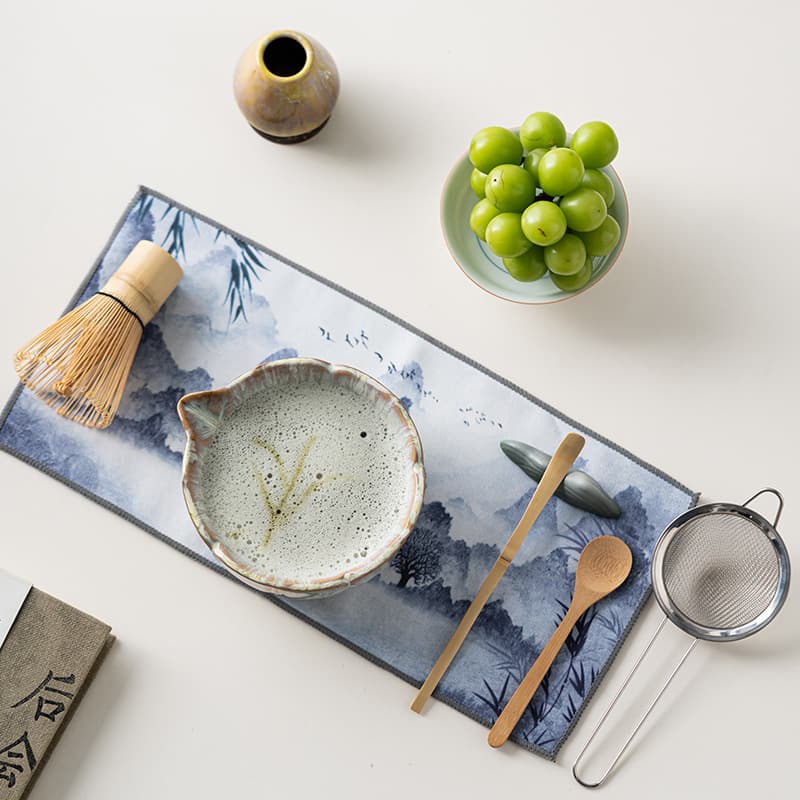
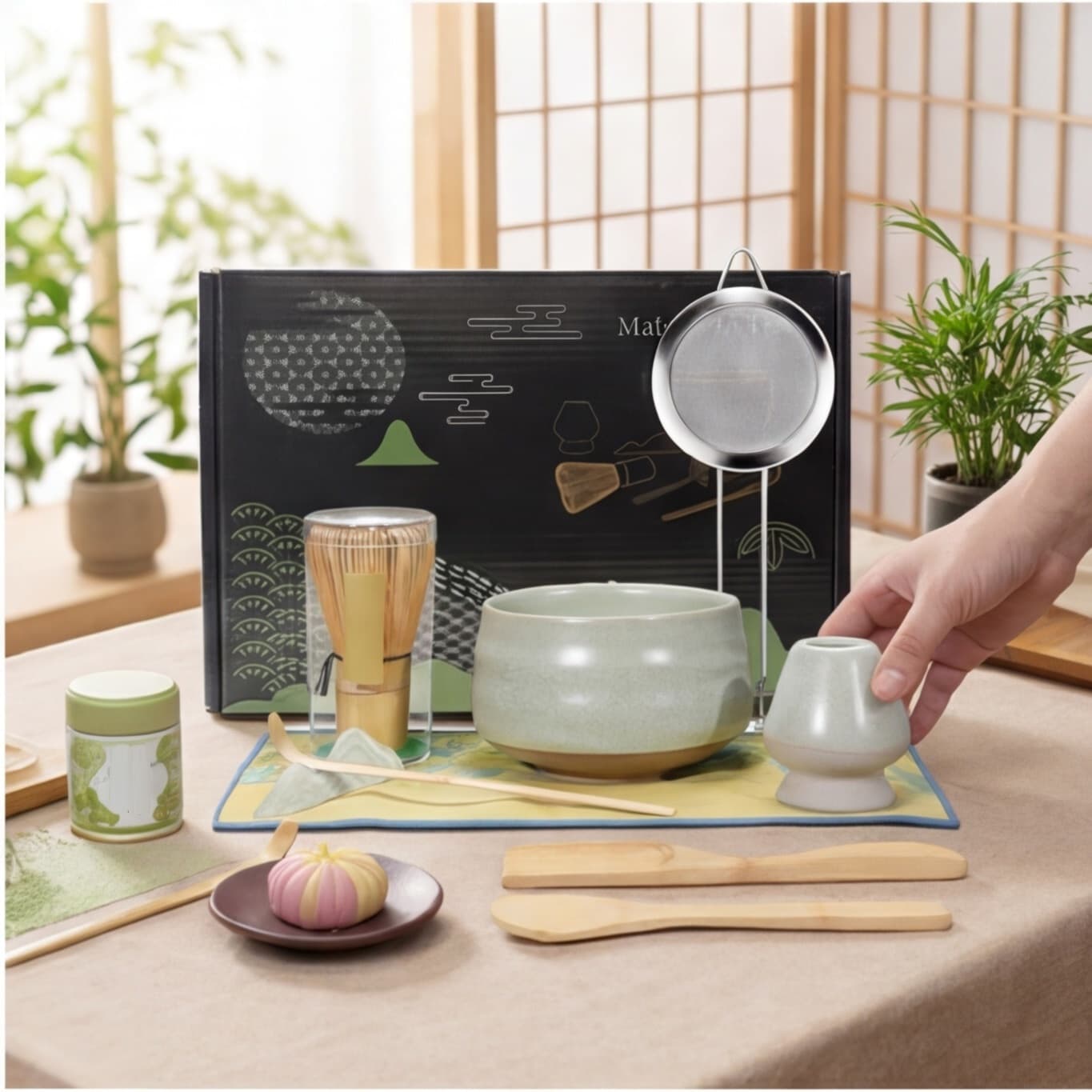
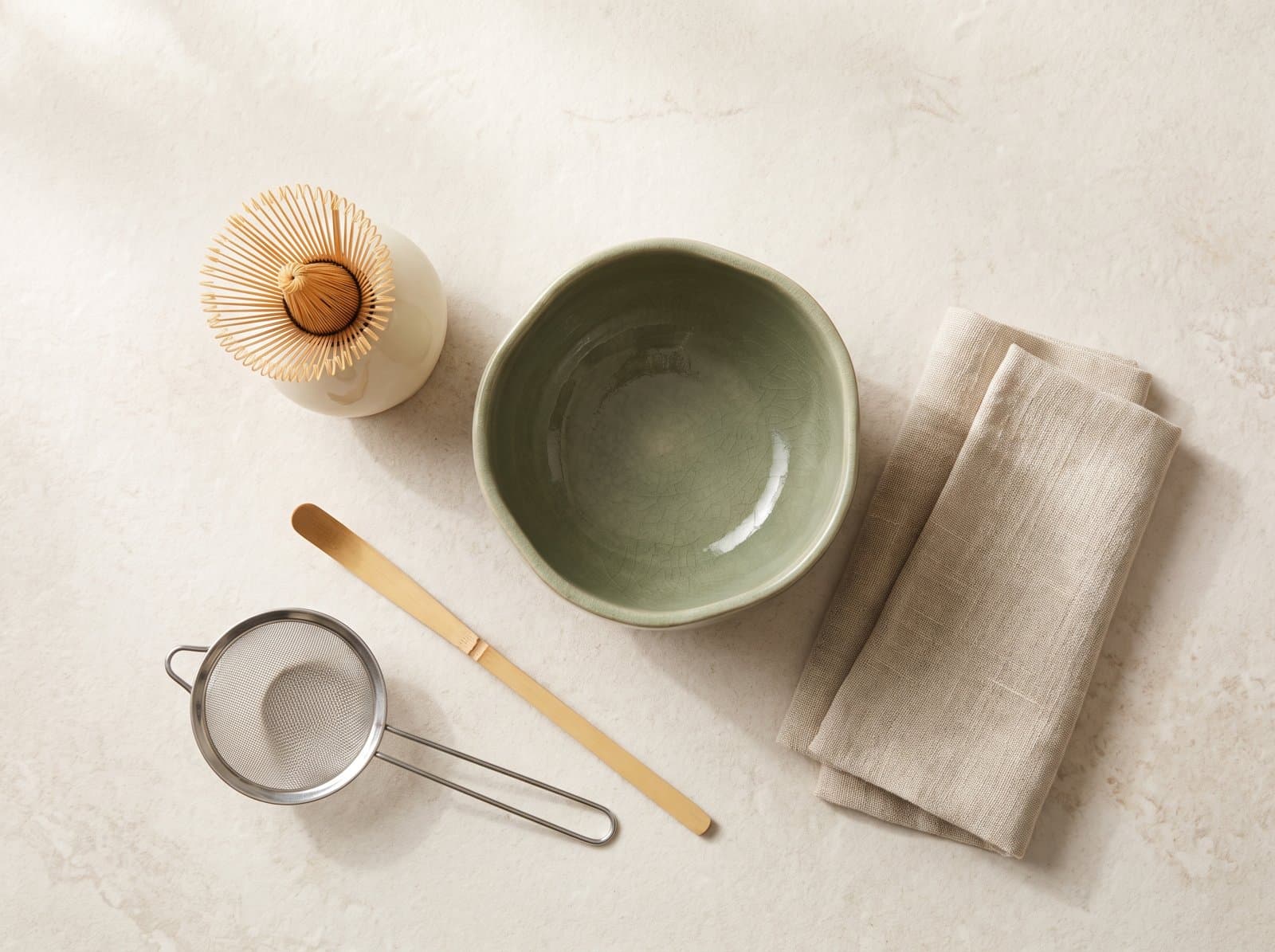
Everything the matcha ritual asks for.
Bowl, whisk, scoop, sifter, and rest — photographed exactly as they arrive.