10 August 2026 · 6 min read
How to make matcha without a whisk (and why you shouldn't)
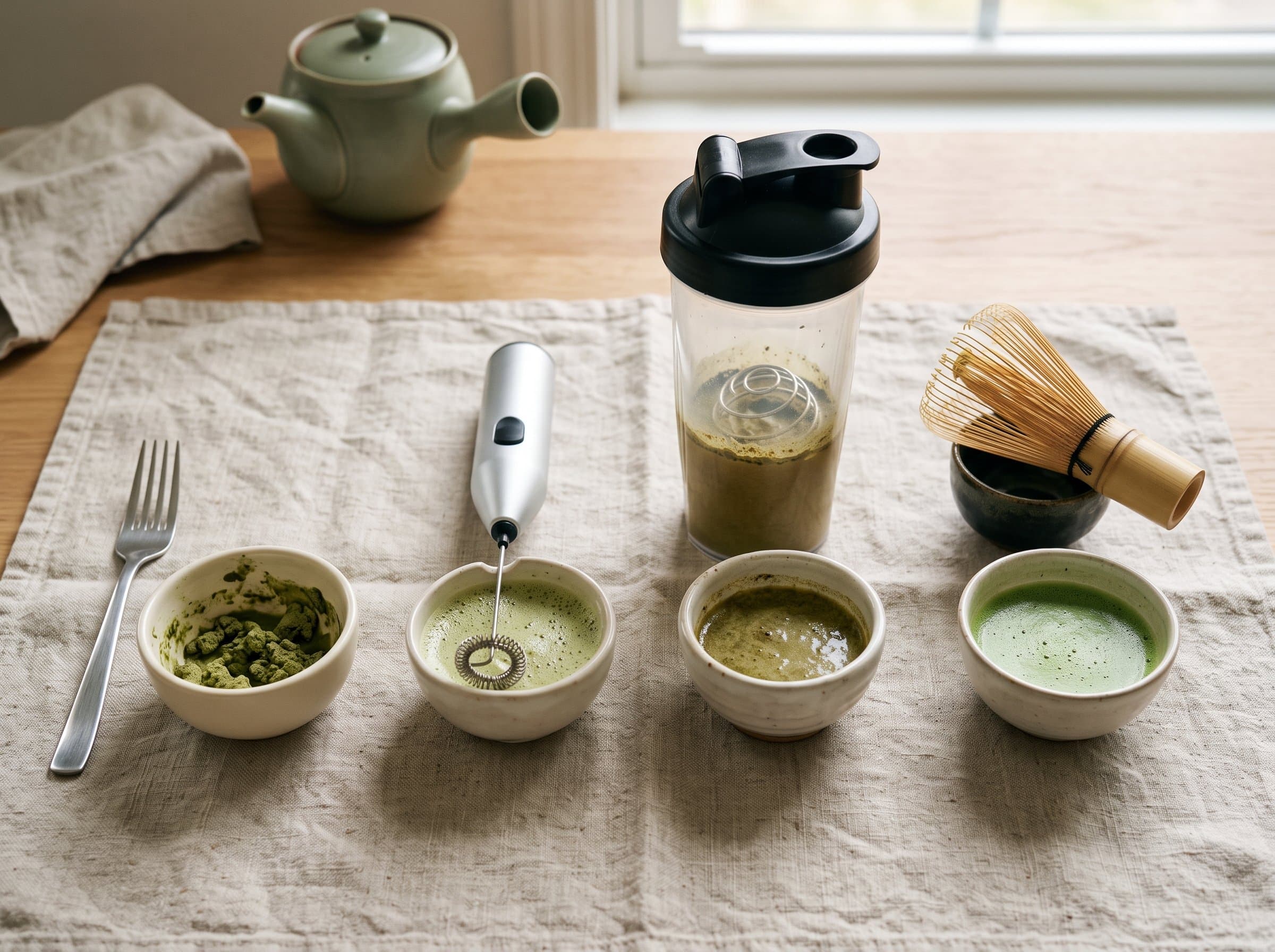
The internet insists you can make matcha with a fork, a milk frother, or a protein shaker bottle. We tested all three so you don't have to. Two almost work. None of them make matcha.
The fork
A fork breaks dry clumps passably if you sift first and stir for a full minute. What it cannot do is aerate: foam needs hundreds of fine prongs cutting the liquid fast, and four tines is not hundreds. Verdict: drinkable, flat, sad.
The electric frother
The best of the shortcuts. A handheld frother makes genuine foam in ten seconds — and then overworks it, collapsing the fine microfoam into big soapy bubbles within a minute. It also spatters matcha up the walls of anything smaller than a soup pot. Verdict: fine for lattes, wrong for ceremony.
The shaker bottle
Cold matcha shaken hard is a legitimate summer drink — the Japanese call it mizudashi-style when done cold. But you're drinking suspension, not foam, and hot water turns the bottle into a pressure hazard. Verdict: a different drink entirely.
Side by side: what actually works
- Fork: breaks clumps if you sift first; zero aeration. Drinkable, flat.
- Electric frother: fast foam that collapses into soap bubbles; spatters. Latte-only.
- Shaker bottle: works cold — a legitimate summer drink, but it's suspension, not foam.
- Chasen: 80-100 prongs, fifteen seconds, microfoam that holds. The only tool that makes matcha.
Why the chasen wins
A chasen is eighty to a hundred prongs hand-cut from a single piece of bamboo, curved to flex without snapping. Fifteen seconds of loose W-motion and the surface closes into foam that holds. There is no shortcut because the tool is the technique — four centuries of tea masters already ran the experiments.
If you drink matcha more than twice a week, the whisk pays for itself in texture. And unlike a frother, it asks for no batteries — just a rinse, and a rest on its keeper so the prongs dry open.
Common questions
What's the best matcha whisk substitute?+
A handheld electric frother is the least-bad option — it makes real foam in seconds, though the bubbles are coarser and collapse faster than chasen foam. For cold matcha, a tightly-capped shaker bottle genuinely works. Neither replaces the whisk for a proper bowl.
Can you make matcha with a fork?+
You can break up clumps with a fork if you sift first and stir for a full minute, but four tines cannot aerate. The result is drinkable and flat — matcha-flavoured water, not matcha.
Does a milk frother work for matcha?+
It makes foam, yes — but overworks it into big soapy bubbles within a minute, and spatters matcha up the walls of anything smaller than a soup pot. Fine for lattes in a tall jug, wrong for a ceremony bowl.
Is a bamboo whisk worth it?+
If you drink matcha more than twice a week, absolutely. The chasen is the only tool that builds the fine microfoam that carries the aroma — and it costs less than a month of café matcha lattes.
More matcha guides
The matcha tools for this ritual
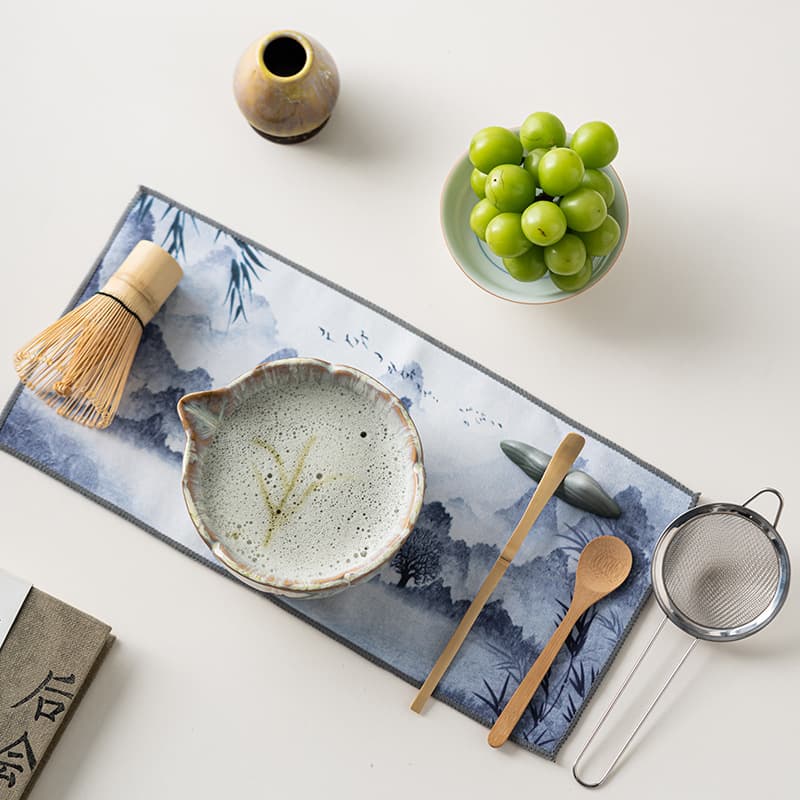
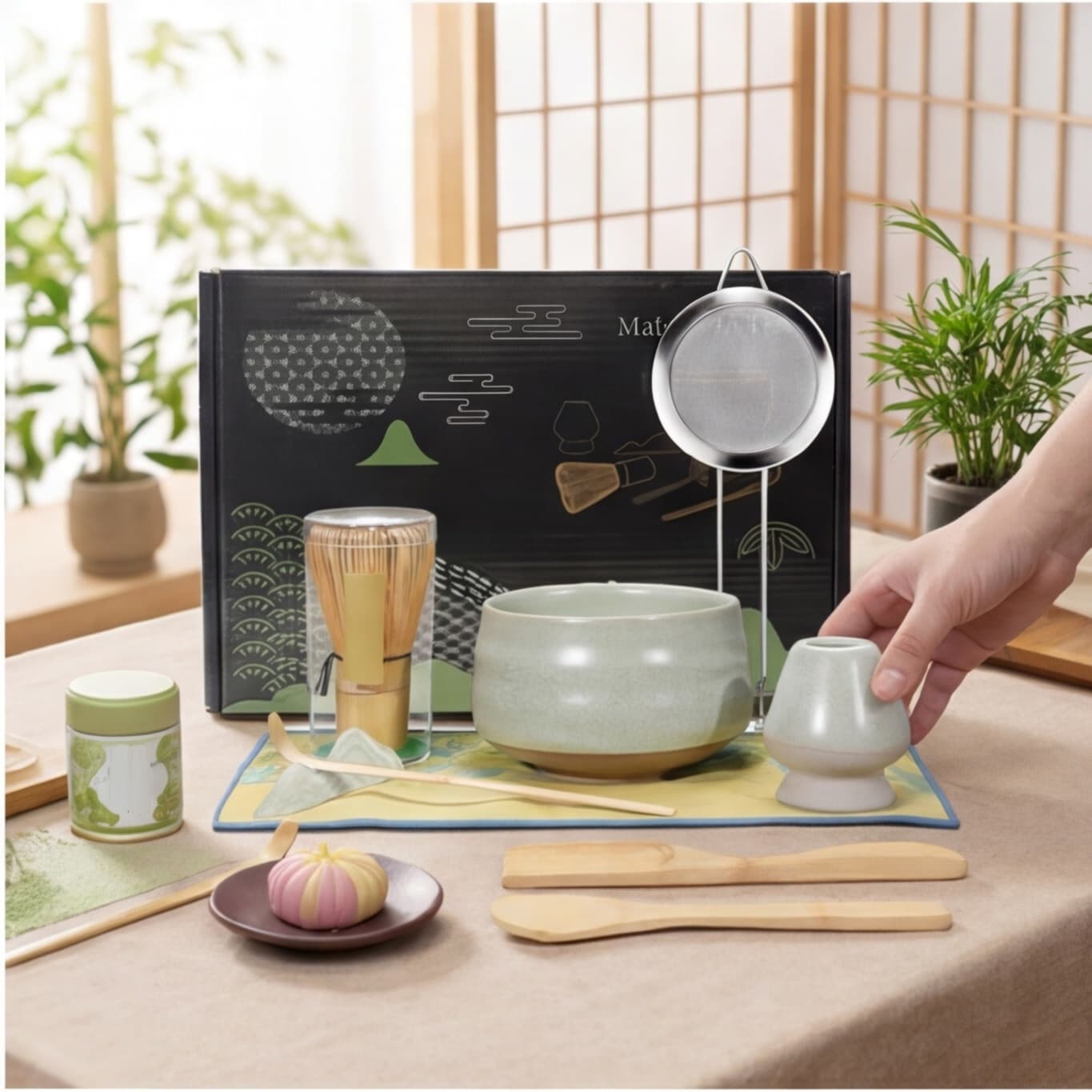
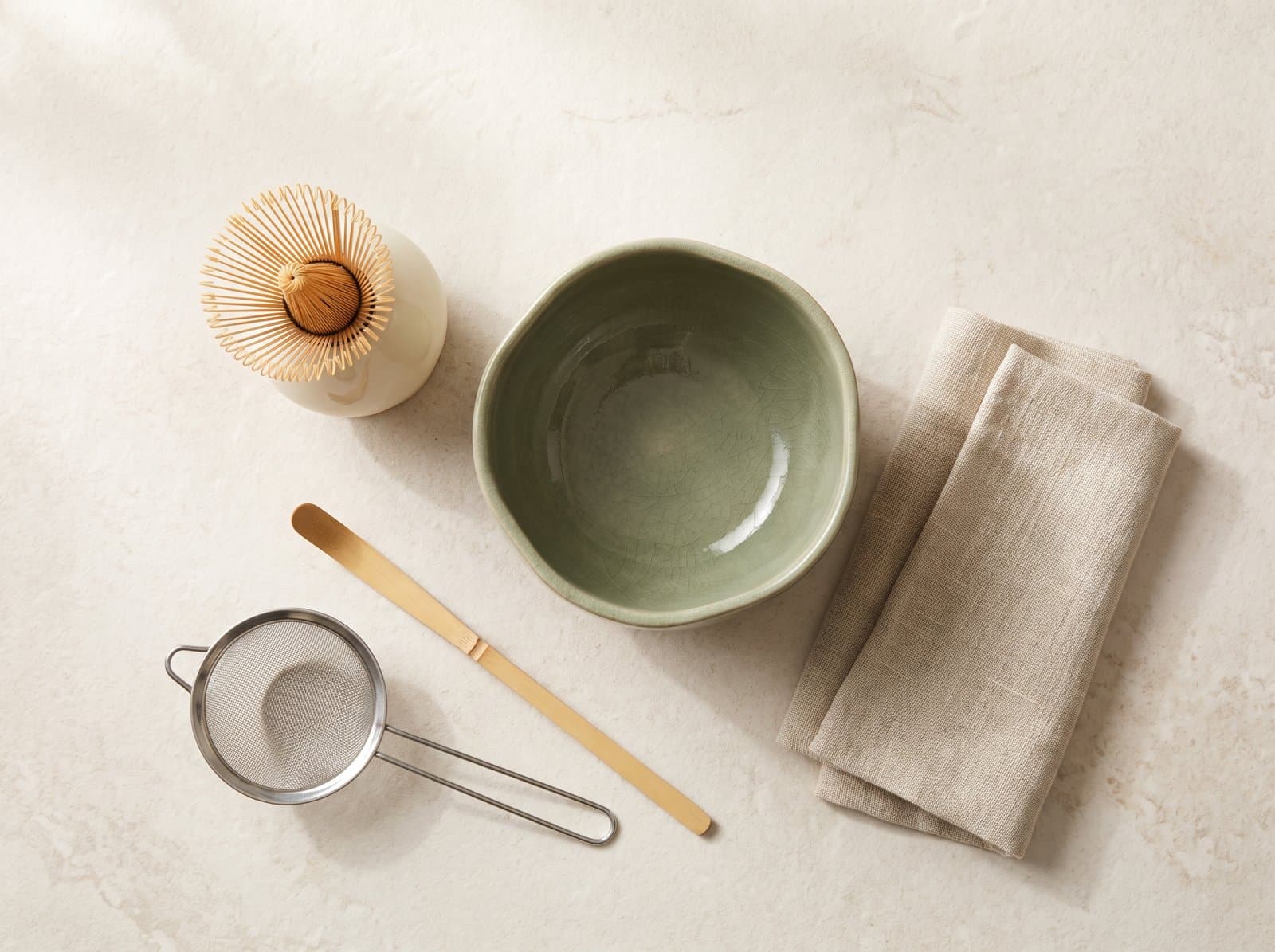
Everything the matcha ritual asks for.
Bowl, whisk, scoop, sifter, and rest — photographed exactly as they arrive.