11 August 2026 · 5 min read
Matcha vs. coffee: the honest comparison
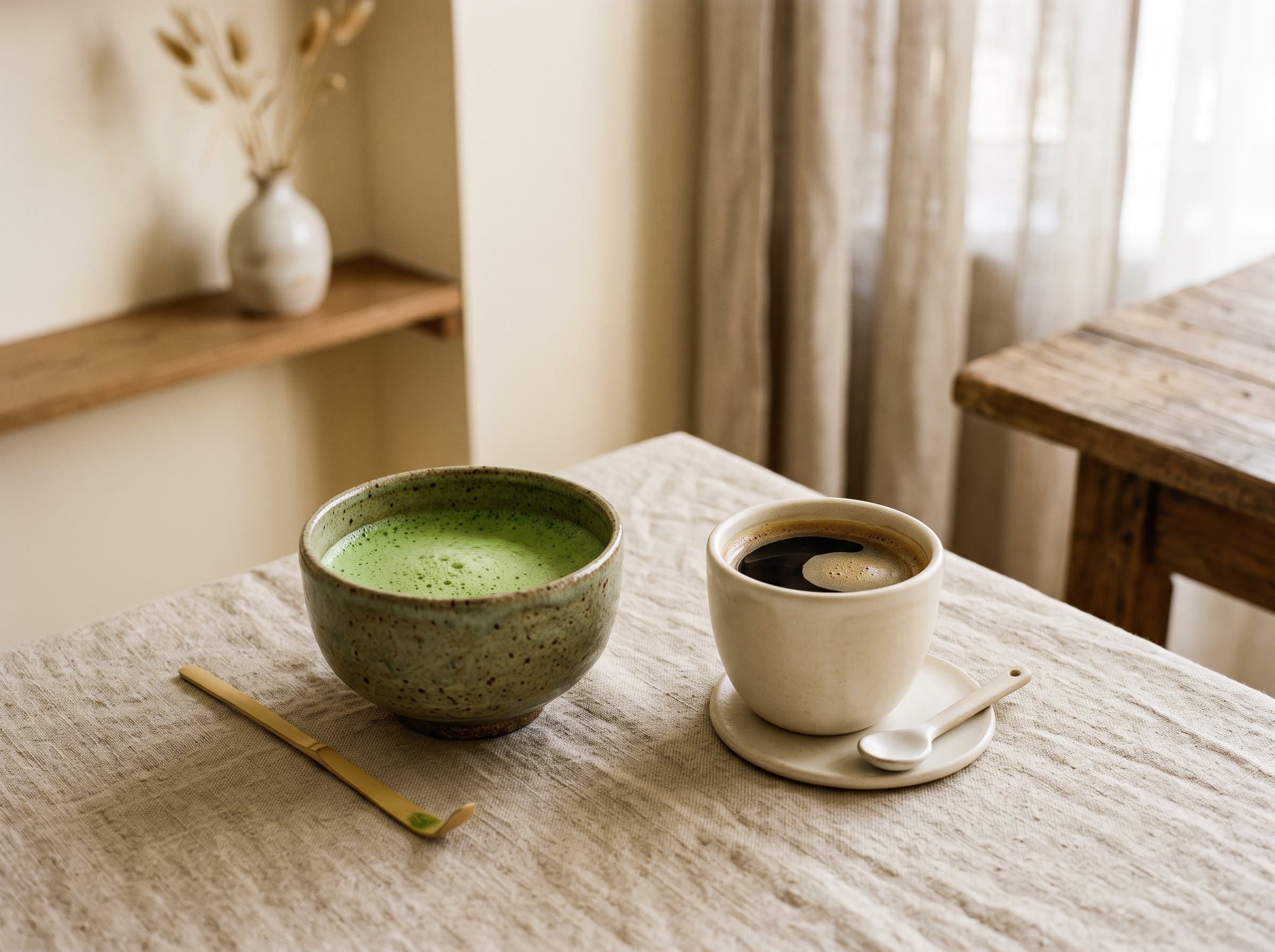
Both will wake you up. That's where the similarity ends. We drink both — here's the honest ledger, number by number, so you can decide which one earns the morning.
The caffeine curve
A bowl of matcha carries roughly 60-70mg of caffeine against coffee's 95mg — but matcha's caffeine arrives bound to L-theanine, an amino acid that slows absorption. The result people report, and the reason the comparison exists at all: coffee spikes and drops; matcha rises and holds. Three to four hours of level attention instead of a peak and a 3pm negotiation with the couch.
Side by side
- Caffeine: matcha 60-70mg, coffee ~95mg per serving.
- Onset: matcha 30-60 minutes to a plateau; coffee 15-30 minutes to a peak.
- Duration: matcha 3-4 hours of level focus; coffee 1-2 hours then the drop.
- Jitters: rare on matcha (the L-theanine), common on coffee's second cup.
- Cost per day: matcha ~$1.30-1.60, home coffee ~$0.60-0.80.
The crash question
Coffee's crash is the adenosine bill coming due all at once — caffeine blocks the tiredness signal, then lets it through in a flood. Matcha's L-theanine smooths the same mechanism: most people switching report the jitters going first, then the crash. Neither is magic; the curve is just flatter, and the flatter curve is the whole point.
The ritual difference
Coffee at scale is a button press — pod in, cup out. Matcha refuses to be automated: sift, heat to 80°, whisk fifteen seconds. Two minutes of making something by hand before the day starts. For some people that friction is the cost. For the people who switch and stay, it's the benefit — the drink is inseparable from the pause that makes it.
Cost per cup, honestly
Two grams of ceremonial matcha per bowl runs about $1.30-1.60 at honest prices. Specialty coffee at home is 60-80 cents a cup. Matcha costs more per day — roughly $10-12 a week difference for a daily drinker. What you get for the difference is the L-theanine curve, the whole-leaf nutrition, and the ritual itself.
Who should switch, and who shouldn't
Switch if coffee makes you jittery, if you crash hard, or if you want a morning practice that isn't a button press. Stay with coffee if you want maximum caffeine per dollar, or if two minutes of whisking sounds like a chore instead of a pause. The honest answer for most people: coffee for the commute, matcha for the morning.
Common questions
Does matcha have less caffeine than coffee?+
Per serving, yes — roughly 60-70mg in a bowl of matcha against 95mg in a cup of coffee. But matcha's caffeine is bound to L-theanine, which slows absorption, so the effect is a 3-4 hour plateau instead of coffee's spike and drop.
Is matcha healthier than coffee?+
Different, not strictly healthier. Matcha delivers the whole leaf — catechins, chlorophyll, and L-theanine you'd filter out of coffee. Coffee has its own polyphenols. If coffee makes you jittery or crashes you at 3pm, matcha's flatter curve is the practical win.
Will matcha stain my teeth like coffee?+
Less so. Coffee is acidic and tannin-heavy, which etches and stains enamel. Matcha is gentler on enamel, though any pigmented drink stains eventually — rinse with water after and you're fine.
Can matcha replace coffee completely?+
For most people who try it, yes — the switch sticks when the motivation is jitters or the afternoon crash. If you drink coffee for maximum caffeine per dollar, matcha won't beat it on that axis.
More matcha guides
The matcha tools for this ritual
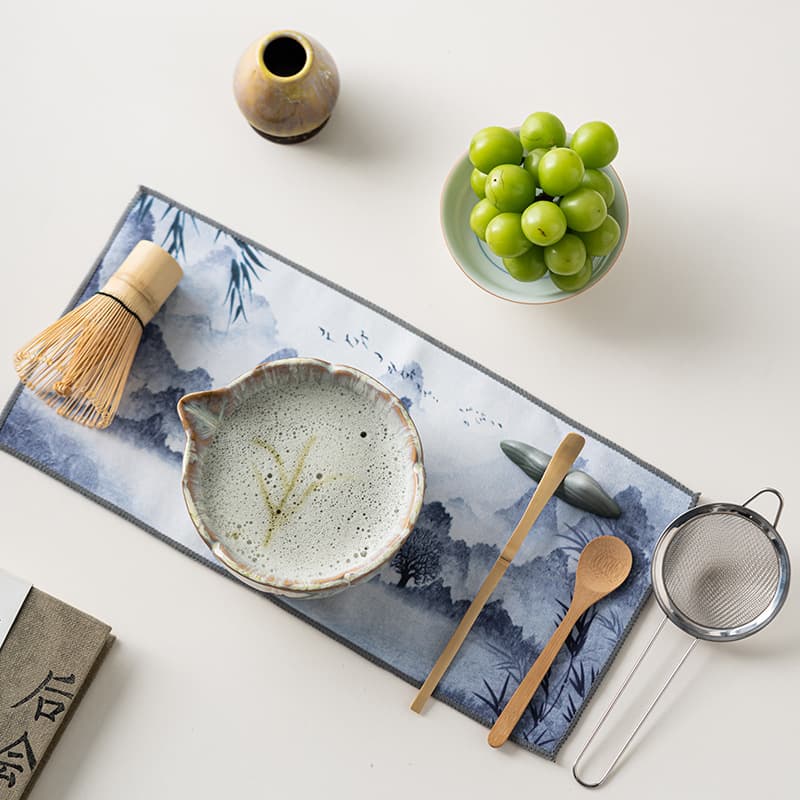
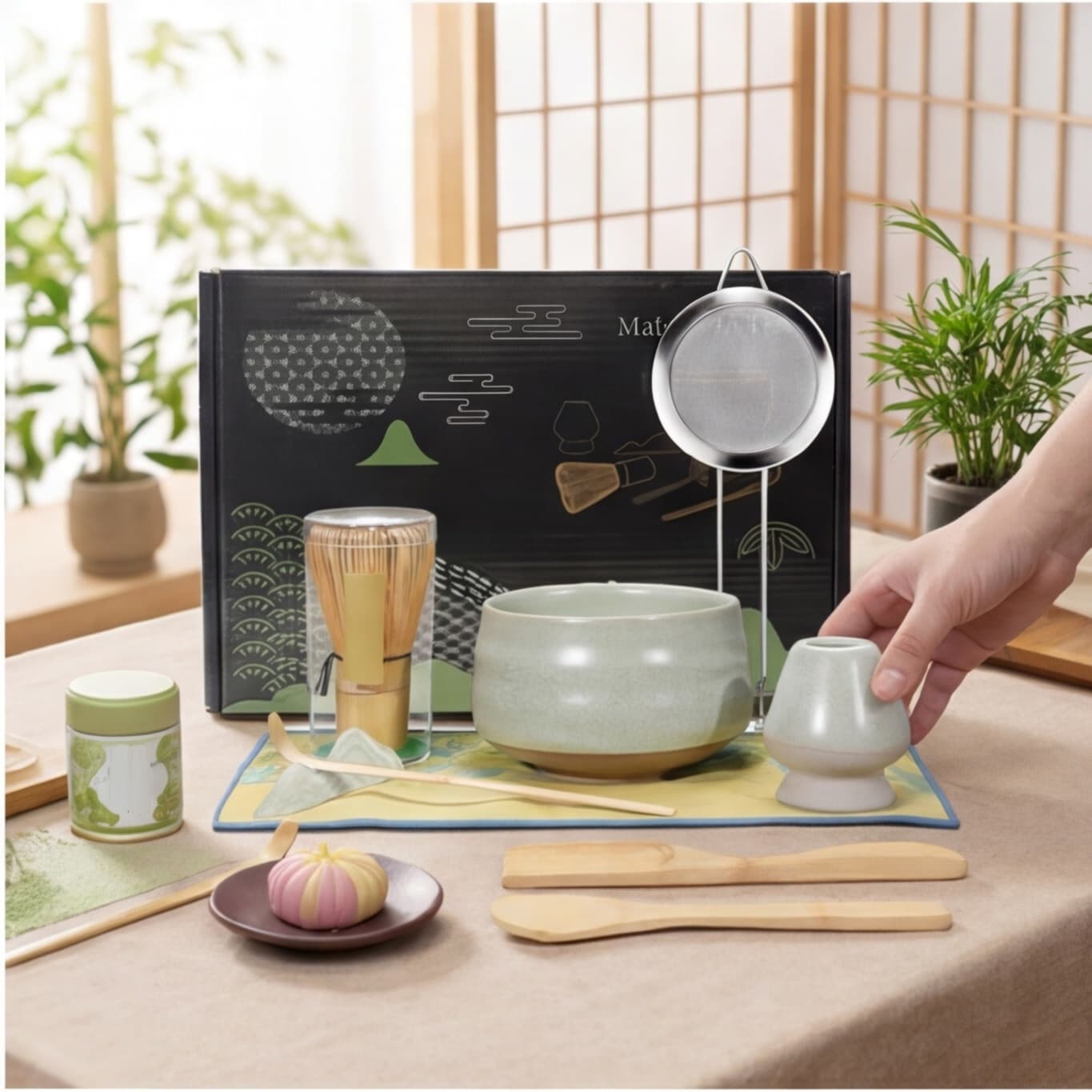
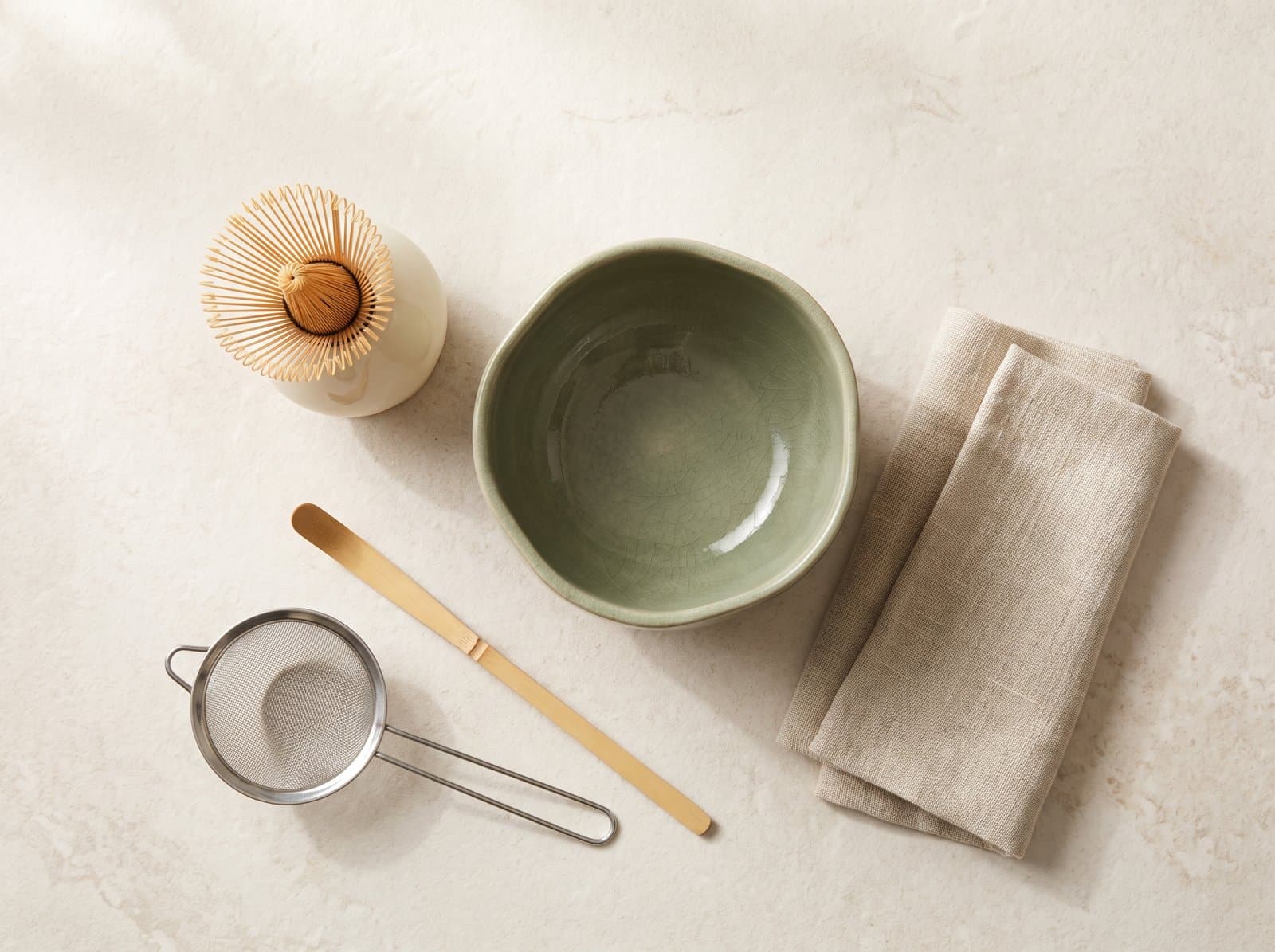
Everything the matcha ritual asks for.
Bowl, whisk, scoop, sifter, and rest — photographed exactly as they arrive.