11 August 2026 · 6 min read
How to make matcha: the only recipe you need
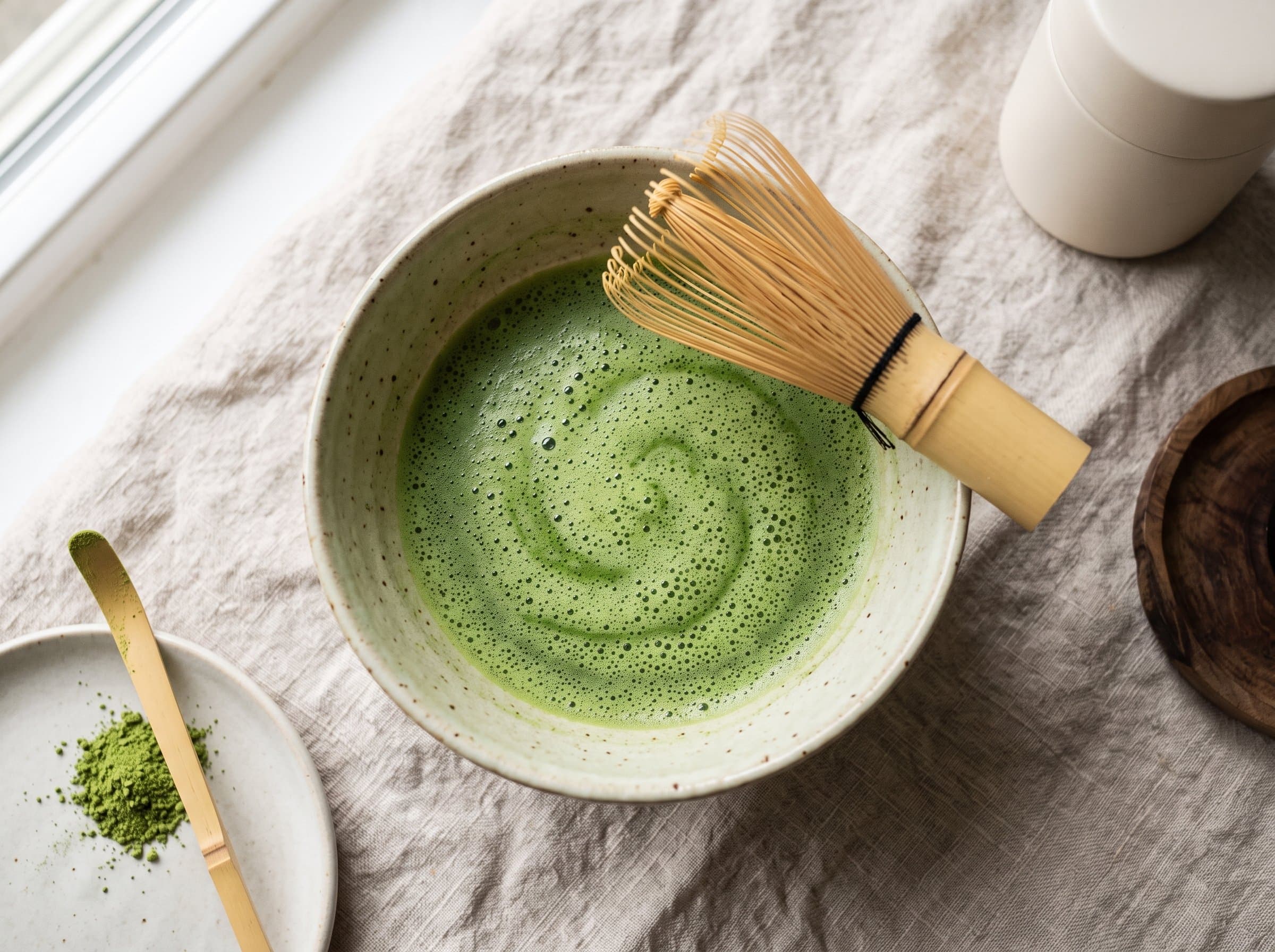
I made bitter, clumpy matcha for months before anyone told me the truth: it's almost never the powder's fault. Every bad bowl comes down to one of three small mistakes, and all three take under a minute to fix. Here's the recipe I use every morning, then the three things that quietly ruin it.
The recipe, first
Sift 2 grams of matcha into a chawan — that's one heaped bamboo scoop, or a level teaspoon if you don't have one yet. Pour in 70ml of water at 80°C. Not boiling. Just steaming, with the kettle rested a minute or two after it clicks.
Now whisk in a fast, loose W — back and forth from the wrist, not round and round from the shoulder — for about fifteen seconds. Keep the whisk floating in the liquid rather than pressing it into the base of the bowl. When the surface closes over into foam that looks like the first frost on a window, stop. Drink it straight from the bowl, both hands around the warmth. That's the whole thing.
Mistake one: boiling water
This is the one that makes people decide they hate matcha. Water at 100°C scorches the powder and releases the bitter tannins all at once, and no amount of whisking brings the sweetness back. Let the kettle sit for two minutes after it boils, or splash a little cool water into the bowl first. Eighty degrees isn't a suggestion from a tea snob — it's the entire difference between sweet grass and ash.
Mistake two: skipping the sift
Matcha is ground finer than flour and clumps the moment it meets humid air — and your kitchen is humid. You can't break those clumps with the whisk; they just get pushed around and sink. Ten seconds through a fine mesh sifter before the water goes in is the whole fix. I resisted buying one for a year. The first sifted bowl made me annoyed I'd waited.
Mistake three: stirring instead of whisking
A spoon — or a slow, circular stir — mixes the powder into the water but never aerates it. The foam isn't decoration; it's what carries the aroma and gives the bowl its texture. A chasen's hundred fine prongs cut the liquid fast enough to build it. Four fork tines, or a spoon, simply can't move that fast. This is the one place the tool genuinely can't be swapped.
What a good bowl actually looks like
Pale jade green, with a fine, even foam across the whole surface — not a few big bubbles around the edges. It should smell faintly sweet and grassy before you sip, and taste smooth rather than sharp. If yours looks murky, tastes bitter, or has grit at the bottom, go back up the list — it's one of the three.
That's the whole recipe. Two grams, eighty degrees, fifteen seconds. The rest is repetition — and a bowl and whisk you'll reach for every morning without thinking about it.
Common questions
How much matcha powder per cup?+
Two grams — one heaped chashaku (bamboo scoop) or a level teaspoon — per 70ml of water. That's the traditional usucha (thin tea) ratio. For a stronger bowl, hold the water and add powder, not the reverse.
Why is my matcha bitter?+
Almost always water temperature. Water above 85°C scorches the powder and releases tannins instantly. Let the kettle rest two minutes after it boils. If it's still bitter at 80°C, the powder itself is culinary grade being sold as ceremonial.
Why is my matcha clumpy?+
Skipped the sift. Matcha is ground finer than flour and clumps the moment it meets humid air. Ten seconds through a fine mesh sifter before the water touches it is the whole fix.
Can I make matcha in a regular mug?+
You can hold matcha in a mug, but you can't properly make it in one — the walls are too high and narrow for the whisk to move. A wide chawan is what lets the foam form. See our chawan vs regular bowl guide for the geometry.
Do I need a bamboo whisk?+
For real foam, yes. Forks and frothers mix but don't aerate — the chasen's 80-100 fine prongs are the only tool that cuts the liquid fast enough to build microfoam. The full test of every shortcut is in our matcha without a whisk article.
More matcha guides
The matcha tools for this ritual
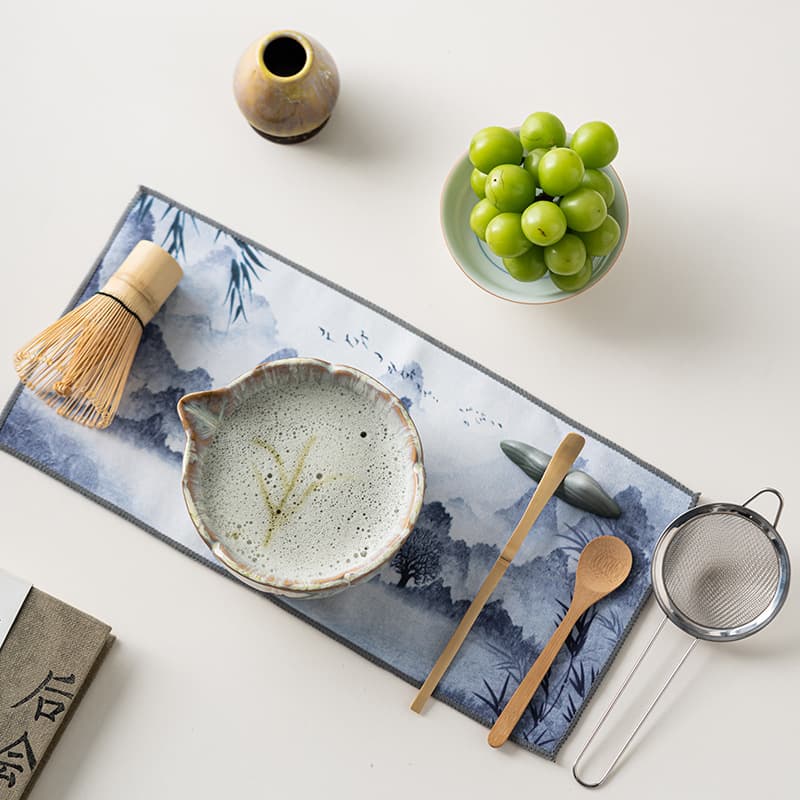
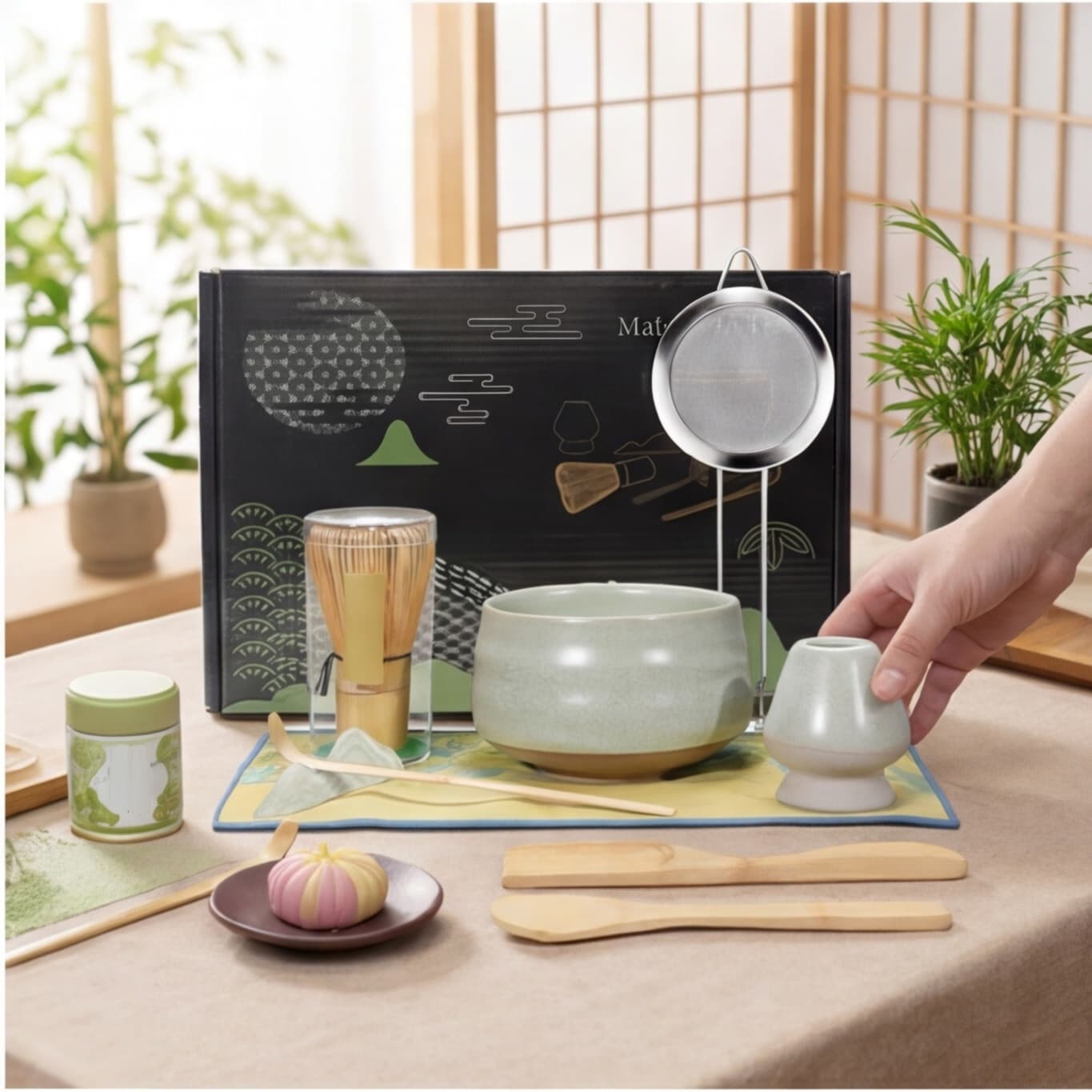
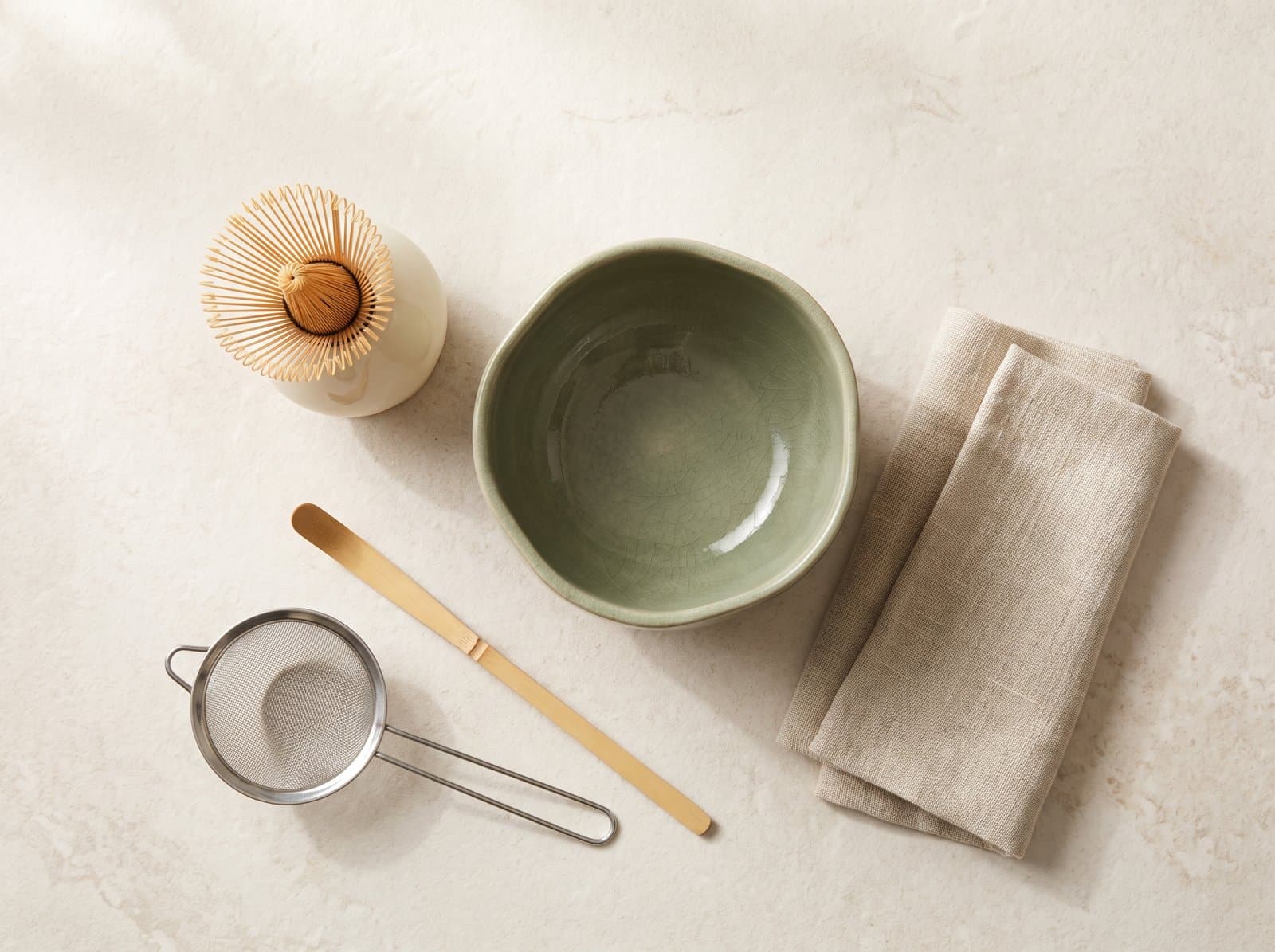
Everything the matcha ritual asks for.
Bowl, whisk, scoop, sifter, and rest — photographed exactly as they arrive.