11 August 2026 · 4 min read
How to clean a matcha whisk (so it lasts a year, not a month)
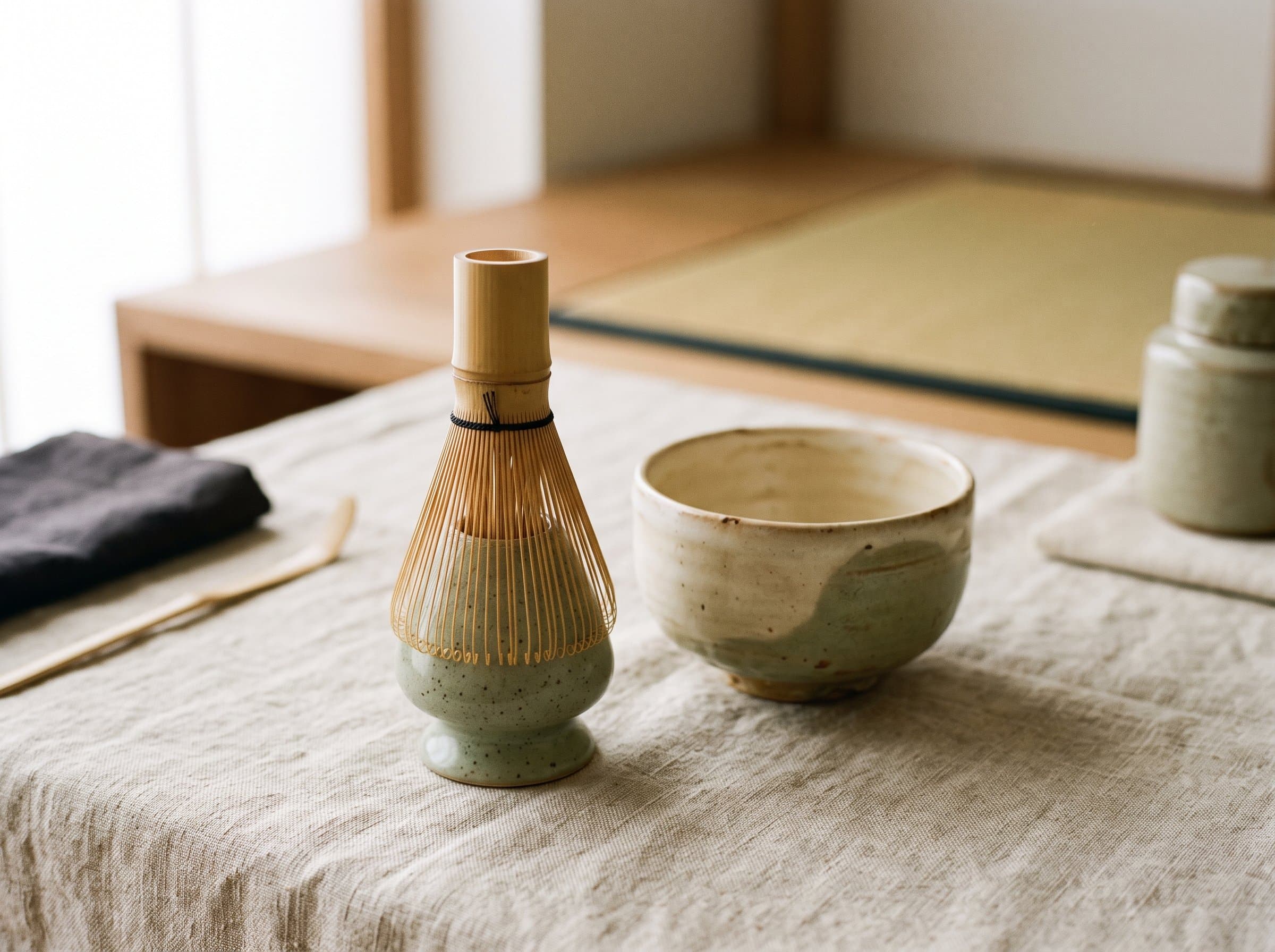
A bamboo chasen should last a year of daily bowls. Most die in a month — not from use, but from being cleaned wrong. The fix is a ninety-second ritual that takes less time than the whisking itself. Here it is, step by step.
The 90-second cleaning ritual
- Rinse immediately. The moment you finish the bowl, rinse the chasen under warm running water, prongs down, swishing gently until the water runs clear. Matcha residue hardens as it dries — the rinse gets easier the faster you do it.
- No soap, ever. Bamboo is porous and drinks the detergent, which it then releases into tomorrow's matcha. Warm water alone is the entire cleaning agent.
- Never soak. Bamboo left standing in water swells, the prongs splay, and the whisk's shape — the thing that makes the foam — is gone.
- Dry prongs-down on the keeper. The ceramic stand holds the tines open while air moves through them. This is the step everyone skips, and the step that decides the whisk's lifespan.
Why the keeper matters more than the washing
A wet chasen left on its side dries crooked: the inner prongs stay damp, mildew follows, the shape collapses inward. Rest it on the keeper prongs-down and the bamboo dries open, held in the shape the foam needs. This single habit is the difference between a whisk that lasts a season and one that lasts a year. If you own nothing else beyond the whisk, own this.
What kills a chasen early
- The dishwasher — heat and detergent strip and crack the bamboo in one cycle.
- Soaking — the prongs swell and splay permanently.
- Drying upright in a drawer — water pools in the handle and molds from the inside.
- Scrubbing the bowl — pressing the prongs against the ceramic while whisking snaps them. The W-motion rides on the surface of the liquid, not the base.
Before first use
A new chasen arrives with its core tines bound tight. Soak it in warm (not hot) water for two minutes before the first bowl — the inner prongs loosen and unfold into the shape they'll hold. Do this once, at the start. Before each subsequent use, a quick 30-second soak softens the bamboo so the prongs flex instead of snapping.
Rescuing a whisk that's gone wrong
If mold has set in from damp storage, a brief dip in a diluted vinegar solution — a few seconds, no more — then a thorough pat-dry and full air-dry can save it. If the shape has collapsed inward from side-drying, soak it, reshape the prongs gently over the keeper, and let it dry fully in place. A whisk past saving tells you plainly: the foam stops forming no matter how you whisk.
When to replace it
When the center prongs break or the foam stops forming properly no matter your technique. A year of daily bowls is a good run. Keep a keeper and a spare chasen in the drawer and you'll never have a flat morning.
Common questions
Can you put a matcha whisk in the dishwasher?+
Never. The heat and detergent strip the bamboo, crack the prongs, and collapse the whisk's shape in one cycle. Warm water and a gentle swish is the entire cleaning method.
Do you use soap on a matcha whisk?+
No. Bamboo is porous and drinks the soap, which it then releases into tomorrow's matcha. Warm running water, prongs down, swished until the water runs clear — that's all it needs.
How long does a matcha whisk last?+
About a year of daily use with proper care — rinsed immediately, dried prongs-down on a keeper. Without a keeper and with soaking, most whisks die inside a month. The drying habit matters more than the washing.
Why is my matcha whisk molding?+
It dried damp, usually standing on its handle or lying on its side so water pooled inside. Always dry it prongs-down on a ceramic keeper so air moves through the tines. If mold's already set in, a brief dip in a vinegar solution, pat dry, and full air-dry can save it.
More matcha guides
The matcha tools for this ritual
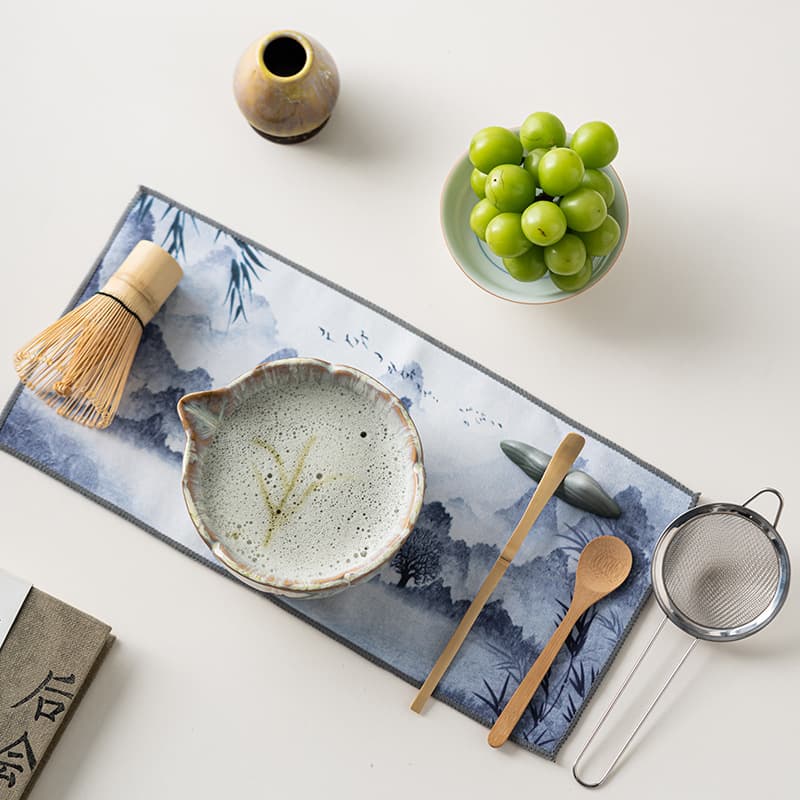
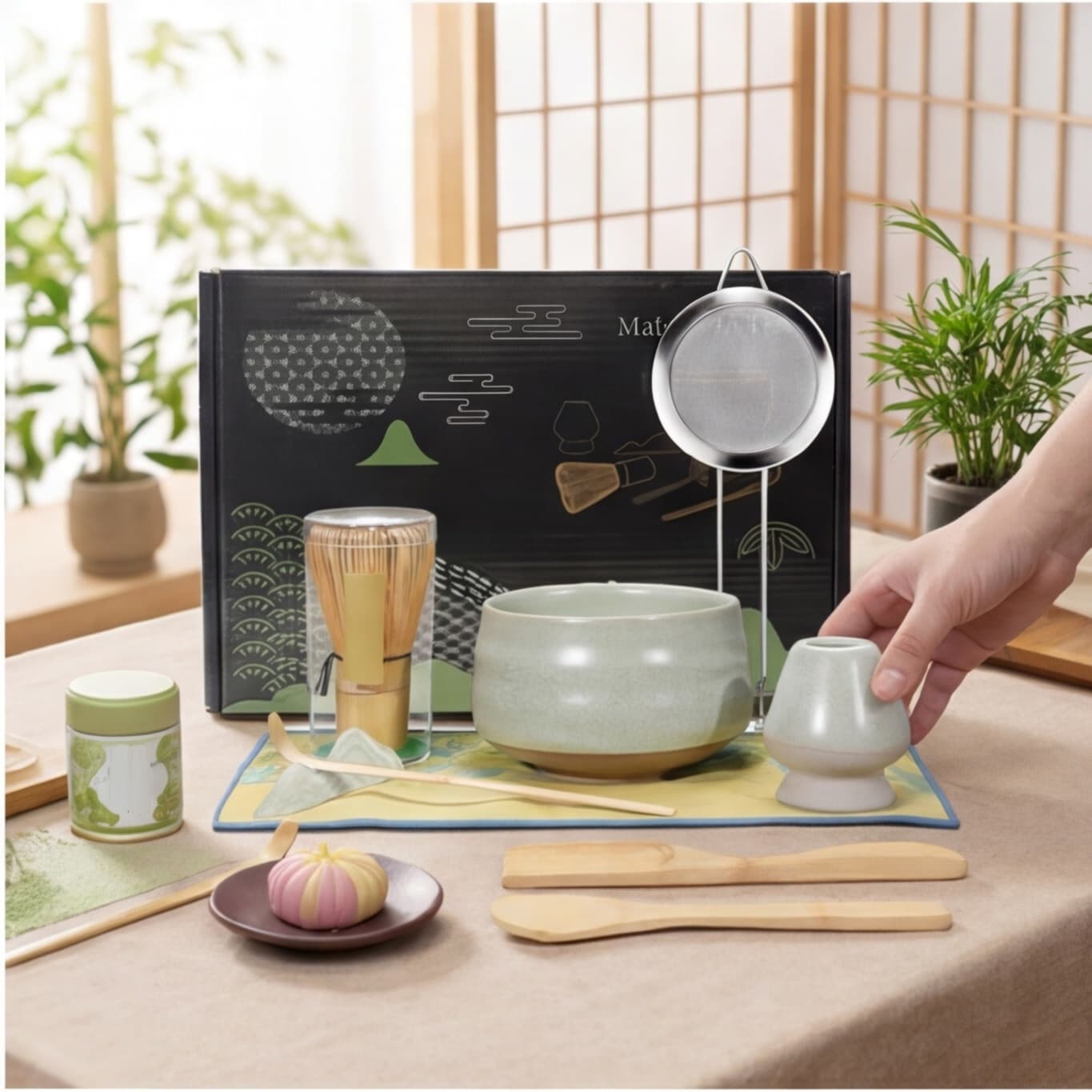
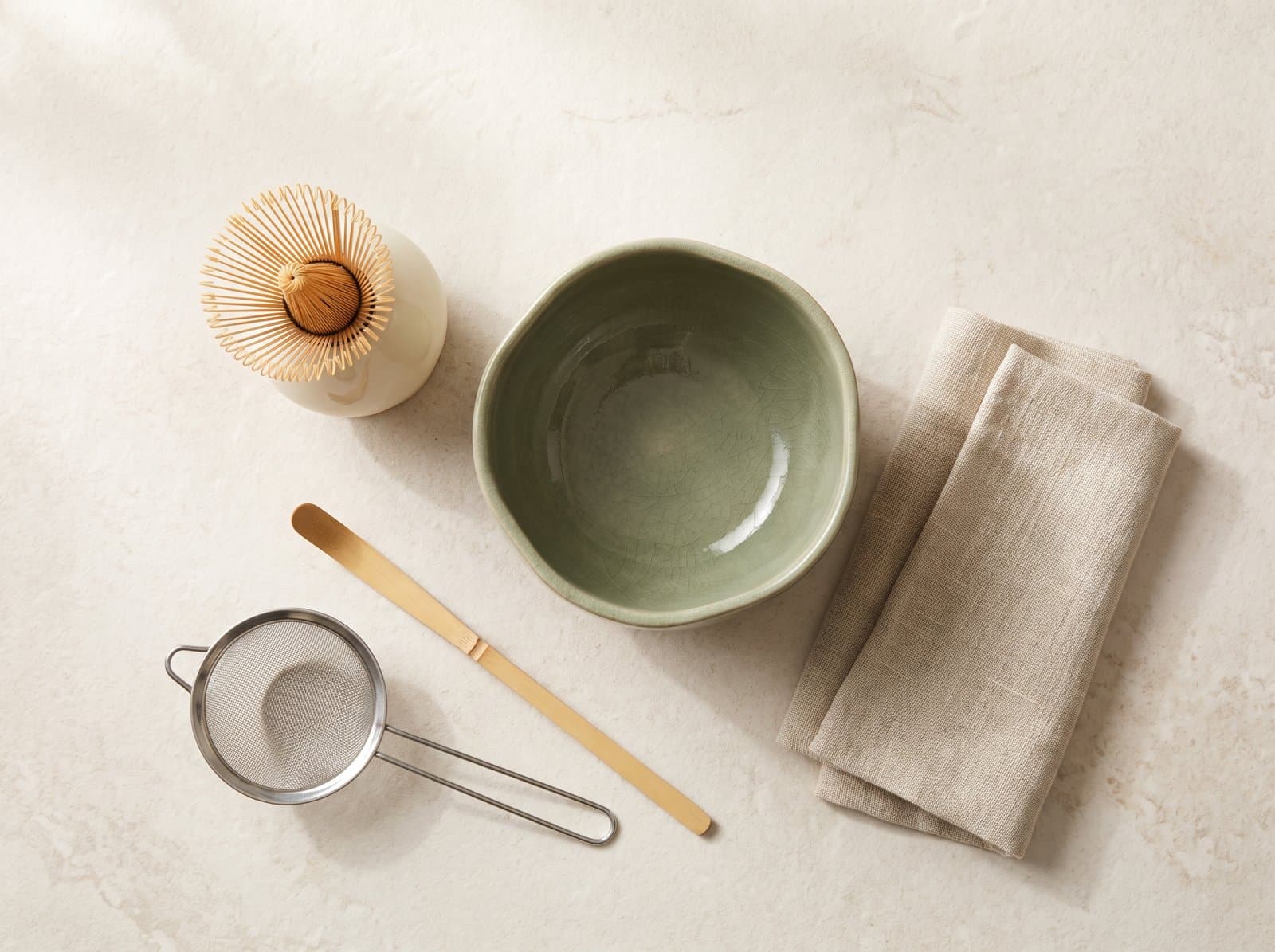
Everything the matcha ritual asks for.
Bowl, whisk, scoop, sifter, and rest — photographed exactly as they arrive.