10 August 2026 · 5 min read
Chawan vs. a regular bowl: why the shape decides the foam
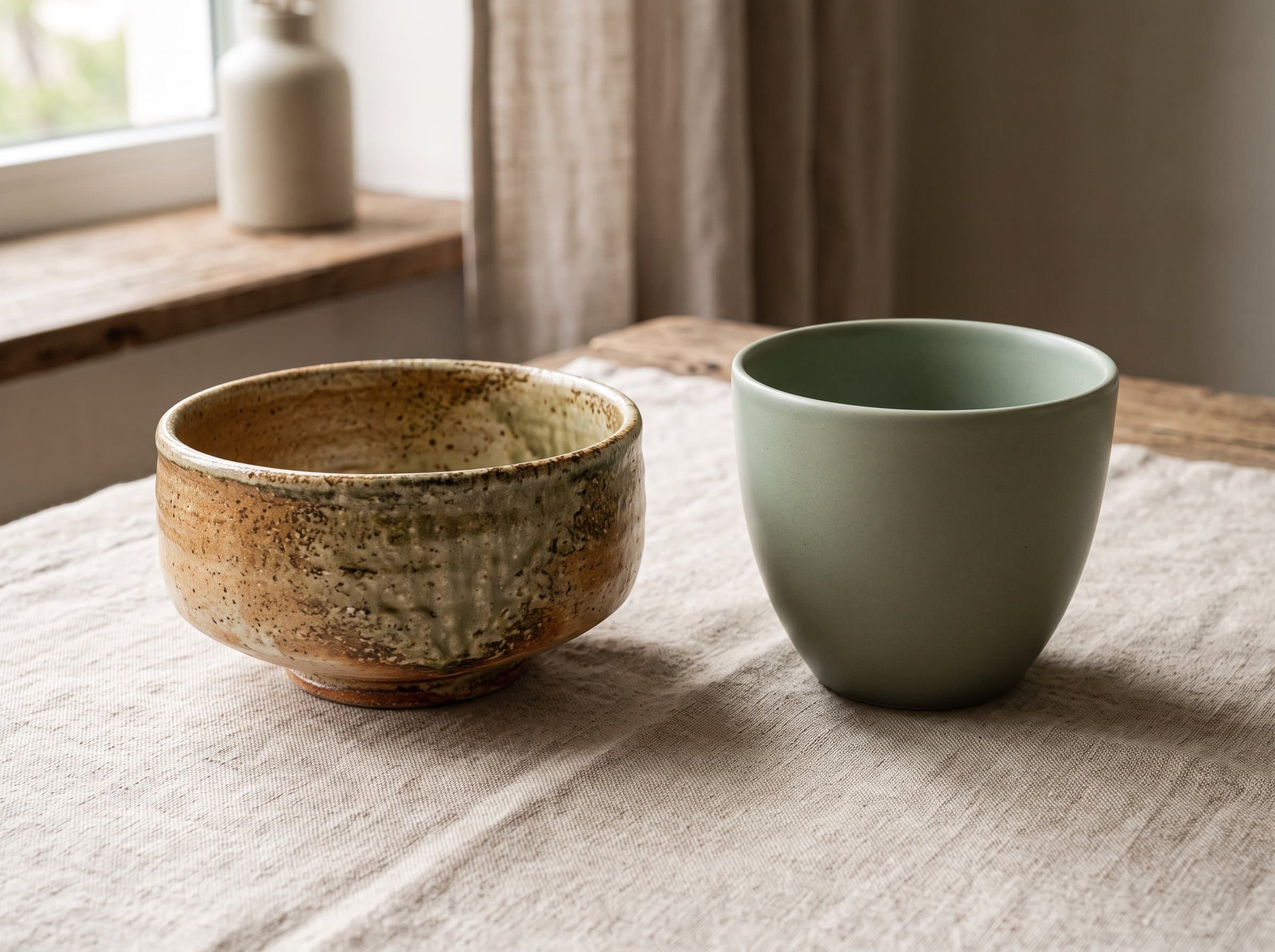
Every matcha person has tried it once: the powder, the kitchen bowl, the fork. The result is matcha-flavoured water with a raft of clumps. The problem isn't technique. It's geometry. Here's exactly what changes when the bowl is built for the whisk — and how to choose one you'll reach for every morning.
A cereal bowl is a trap for the whisk
A chawan is wide at the rim and rounded at the base — typically 12cm across, holding 400-500ml, with walls low enough to see into. None of that is aesthetic. The width gives the chasen's hundred prongs room to travel in the W-motion without clipping the walls. The rounded base keeps the powder suspended where the whisk can reach it, instead of cornered in an angle.
A cereal bowl inverts all of it: narrow mouth, flat base, high walls. The whisk can't swing, the powder hides in the corners, and the foam never forms because the prongs never move fast enough through the liquid. You can stir harder — it changes nothing, because the constraint is the shape, not the effort.
The three measurements that decide the foam
- Diameter: 11-16cm, with the sweet spot around 13cm. Wide enough for the whisk's full stroke, narrow enough to keep the liquid deep.
- Depth: low walls you can see over while whisking. Too deep and you're whisking blind into a well; too shallow and the first stroke redecorates the counter.
- Base: rounded, not flat-angled. A flat base with sharp corners is where powder goes to hide from the whisk.
The rim is for your hands
Chawan are cupped with both hands — the warmth of the bowl is part of the ritual. The foot lifts the hot ceramic off the table; the rim flares so your thumbs rest above the heat. Four hundred years of Japanese tea practice iterated on this shape for a reason: a bowl that burns your fingertips or tips while you whisk gets used once and shelved.
What about mugs and spouted bowls?
A mug is the wrong tool in the opposite direction — tall, narrow, with a handle that forces one hand off the bowl. Spouted bowls are a latte feature: the spout exists to pour matcha into a glass over milk, and it slightly changes the rim where your lips rest. If you drink from the bowl, skip the spout. If every bowl you make becomes a latte, it's genuinely useful.
What to look for when you buy
Weight around 300-400g (enough to feel grounded, light enough to lift one-handed), a glaze you want to look at every morning, and a base you can see into. Hold it in your mind's hand: both palms, thumbs resting on the rim. If that image feels right, the geometry usually is too.
Our kiln-changed chawan are fired in small batches, so the pattern on yours exists on no other bowl — but the geometry underneath is the four-century standard. The width for the whisk, the rounded base, the flared rim. The instrument first; the art as the bonus.
If you take one thing from this: the bowl is not a container. It's half the instrument.
Common questions
Can I use any bowl for matcha?+
You can hold matcha in any bowl, but you can't make it in most. A cereal bowl's narrow mouth and high walls trap the whisk and hide the powder in corners, so the foam never forms. The chawan's wide, low shape is functional, not decorative.
What size should a chawan be?+
11-16cm across, with the sweet spot around 13cm — wide enough for the chasen's prongs to swing the W-motion without clipping the walls, small enough to cup in both hands. Capacity around 400-500ml.
Why are chawan so expensive?+
The good ones are hand-thrown and wood-fired in small batches, so no two glazes repeat. But you're also paying for four centuries of iterated geometry — the width, foot, and rim are all doing work. Our kiln-changed chawan keep the geometry and the uniqueness without the collector price.
Do I need a spout on my matcha bowl?+
Only if you're pouring the matcha into a glass for lattes. For drinking straight from the bowl — the traditional way — a spout is unnecessary and slightly changes the rim feel. It's a latte feature, not a ceremony one.
More matcha guides
The matcha tools for this ritual
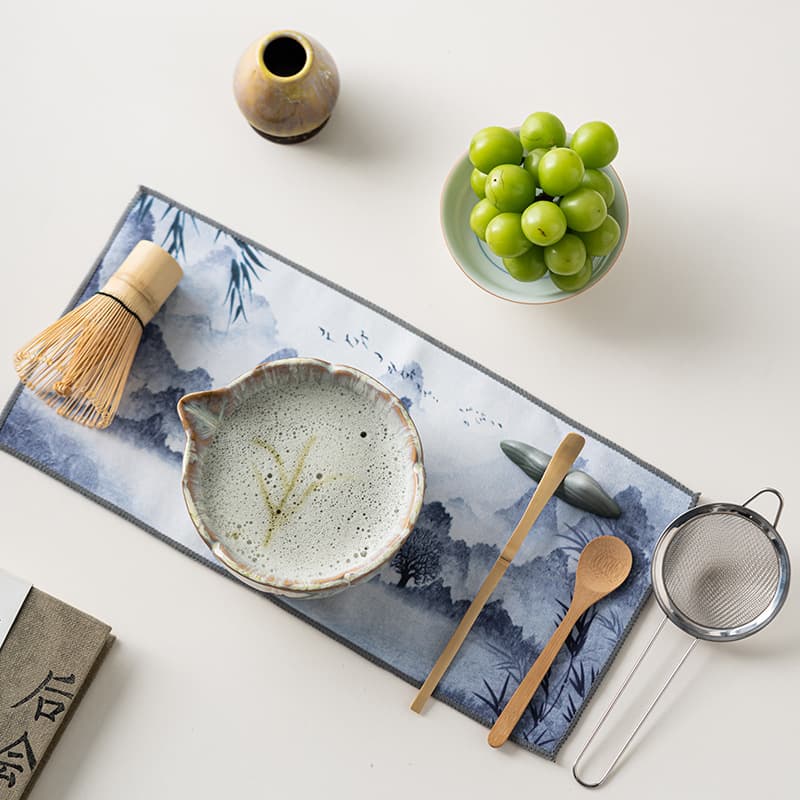
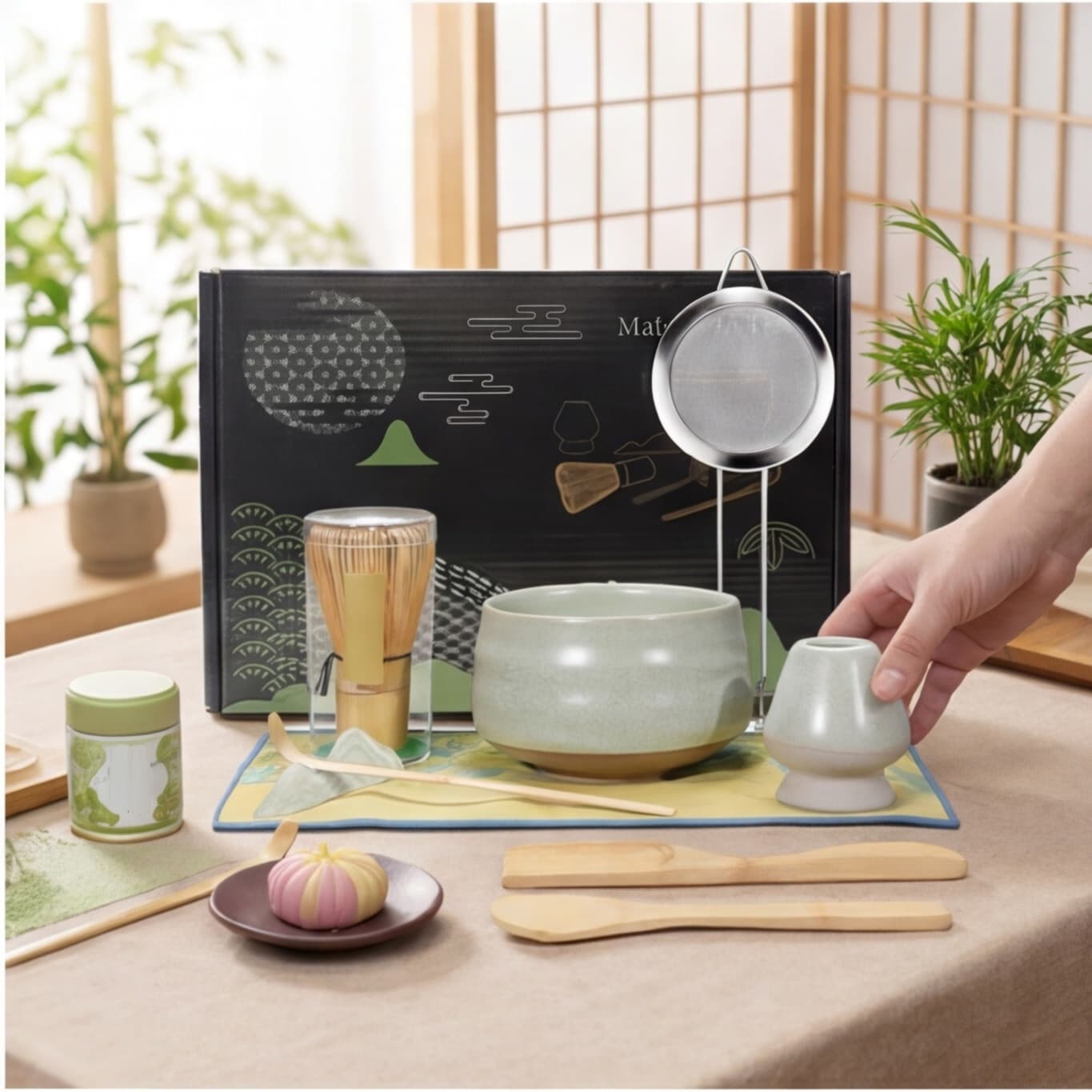
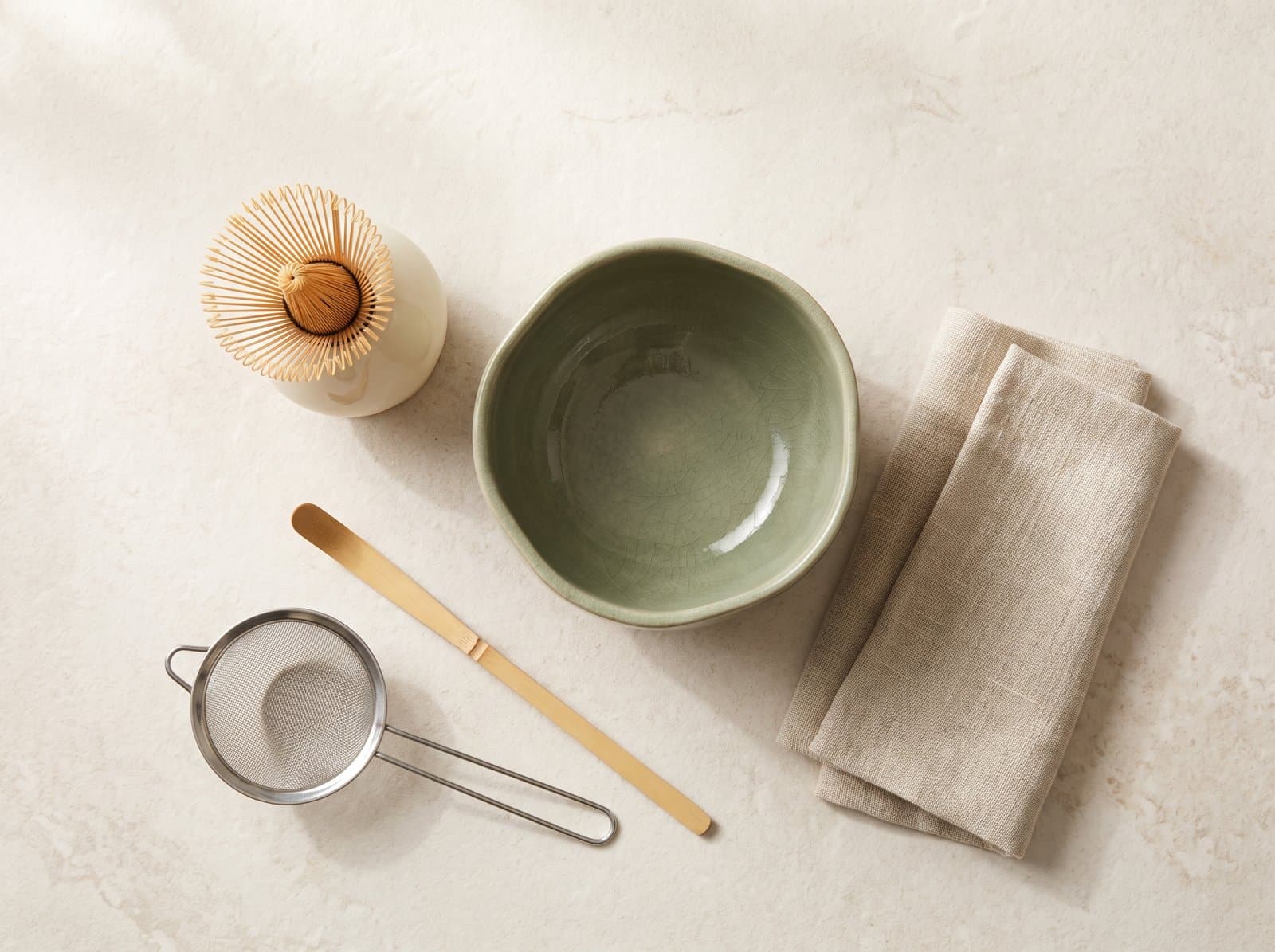
Everything the matcha ritual asks for.
Bowl, whisk, scoop, sifter, and rest — photographed exactly as they arrive.