11 August 2026 · 5 min read
Ceremonial vs. culinary matcha: what you're actually paying for
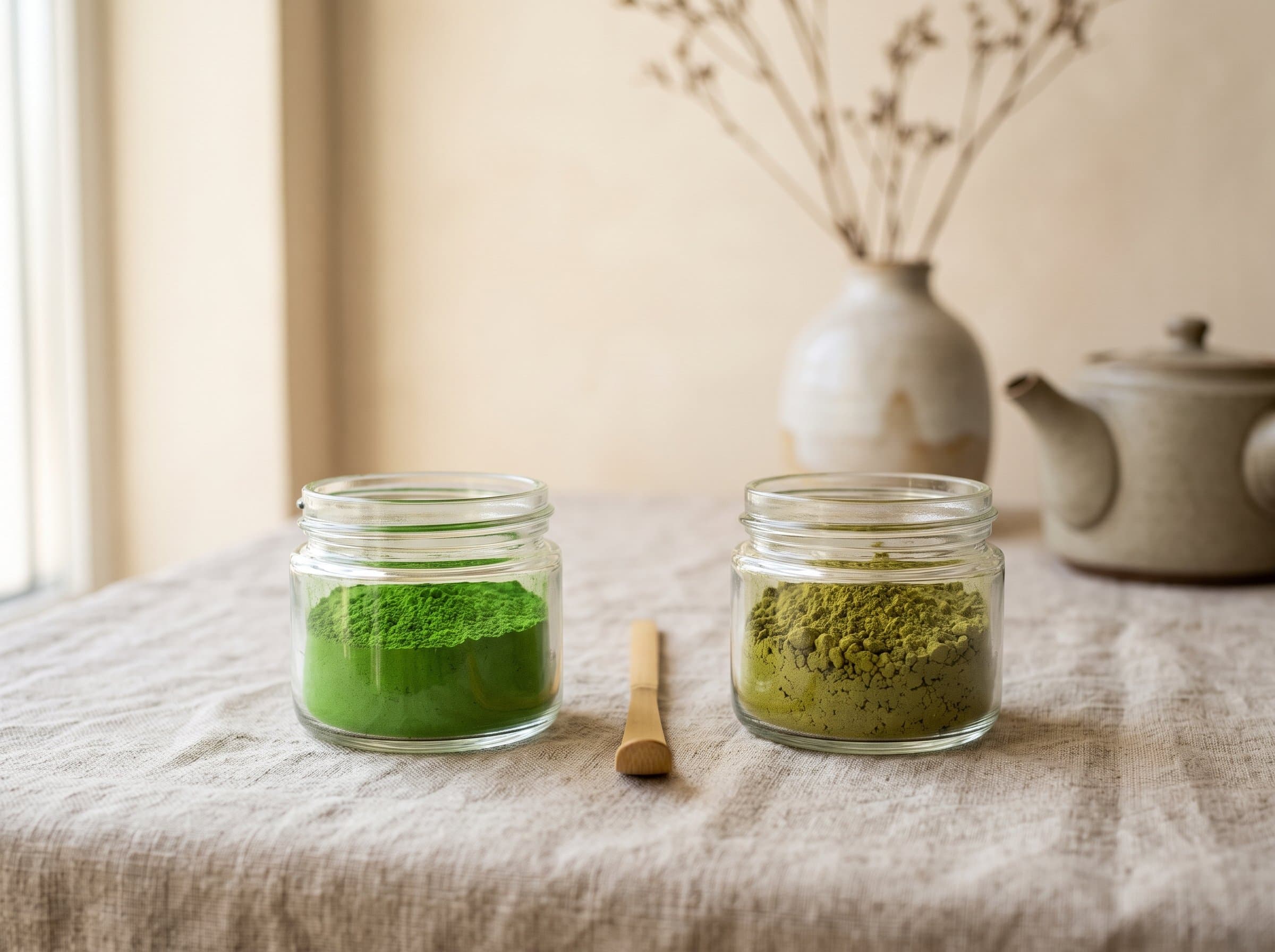
The same green powder sells for $12 and for $45 a tin, and the word on the label — ceremonial or culinary — is the whole reason. Here's what actually changes with the grade, and when cheaper is genuinely correct.
What the grade measures
Ceremonial matcha comes from the first spring harvest: the youngest leaves, shaded longest (which is what builds the L-theanine and the vivid color), stone-ground slowest. Culinary grade comes from later harvests — older leaves, more stem, more bitterness, duller green. Both are real matcha. They're just answering different questions.
When culinary is the right choice
Baking, smoothies, and lattes loaded with milk and sweetener: the subtleties of a first-harvest powder disappear under flour and oat milk. Culinary grade is made for exactly this — stronger bitterness that survives dilution, at a third of the price. Using ceremonial in a cookie is a small crime against both the cookie and the powder.
When only ceremonial works
Whisked with water, drunk straight from the bowl — there's nowhere for bitterness to hide. This is what the grade exists for. If your matcha tastes like ash, the tin was culinary. If it tastes like sweet grass and sea air, it was first harvest.
How to spot the difference without opening the tin
Color first: ceremonial is electric green, almost shockingly so; culinary drifts olive or swampy. Then origin — Uji, Kagoshima, and Nishio are the names that actually mean something. Price is the honest floor: true first-harvest ceremonial under $15 a tin doesn't exist, so a cheap tin labelled ceremonial is telling you a story.
The test once you've opened it
Whisk a small bowl with plain water, no milk, nothing else. Ceremonial tastes smooth and faintly sweet — sweet grass, a little sea air — with no bitterness to hide. Culinary, drunk straight, is bitter and flat in a way that makes you reach for honey. That single bowl tells you more than any label will.
Which one should you actually buy
Ask what you're making. Lattes, smoothies, baking, anything with milk or flour or sugar: buy culinary and spend the difference on good tools — the powder's subtleties disappear under oat milk anyway. Whisked with water and drunk from the bowl: only ceremonial, because there's nowhere for bitterness to hide. Most daily matcha drinkers end up with both — culinary for the lattes, a small ceremonial tin for the mornings that matter.
Our first-harvest tin is ceremonial the way the grade was meant: stone-ground, unsweetened, and made to be whisked, not baked.
Common questions
Is ceremonial matcha worth the price?+
If you drink it whisked with water, yes — first-harvest ceremonial is the only grade with no bitterness to hide. If it goes into lattes, smoothies, or baking, culinary is genuinely correct and ceremonial is wasted money.
Can you drink culinary matcha straight?+
You can, but you'll taste why it's cheaper: later-harvest leaves carry more stem and tannin, so straight culinary matcha is bitter and olive-toned. It's made to be diluted with milk or baked, not sipped.
How can you tell ceremonial from culinary?+
Color first: ceremonial is electric green, culinary drifts olive. Then price: true first-harvest ceremonial under $15 a tin doesn't exist. Origin last — Uji, Kagoshima, and Nishio are the names that matter.
Does ceremonial matcha have more caffeine?+
Slightly, because shading the leaves concentrates both caffeine and L-theanine. But the real difference is the ratio: ceremonial's higher L-theanine smooths the caffeine into a longer, calmer curve.
More matcha guides
The matcha tools for this ritual
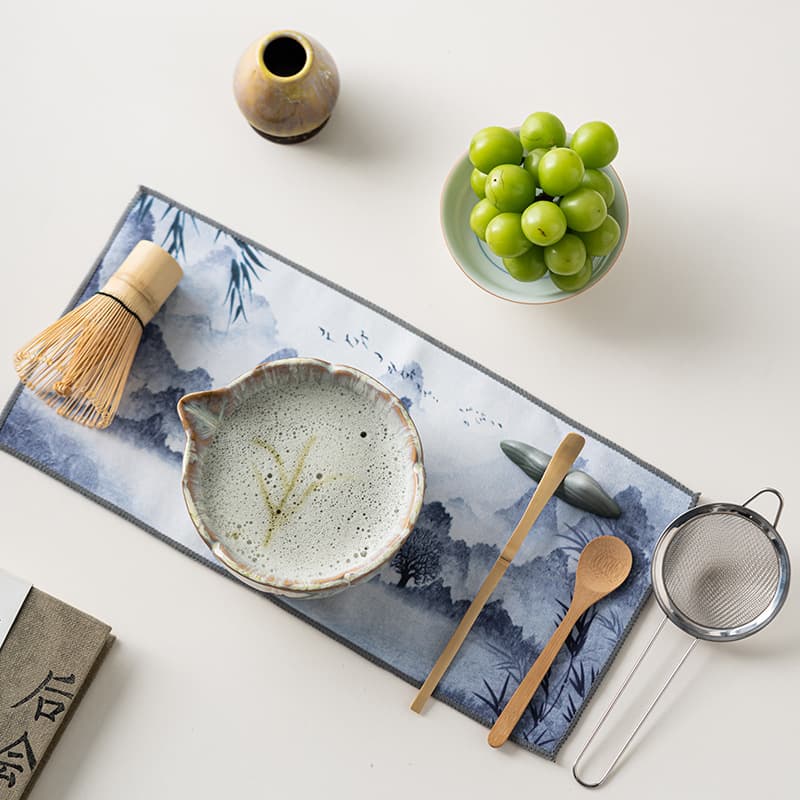
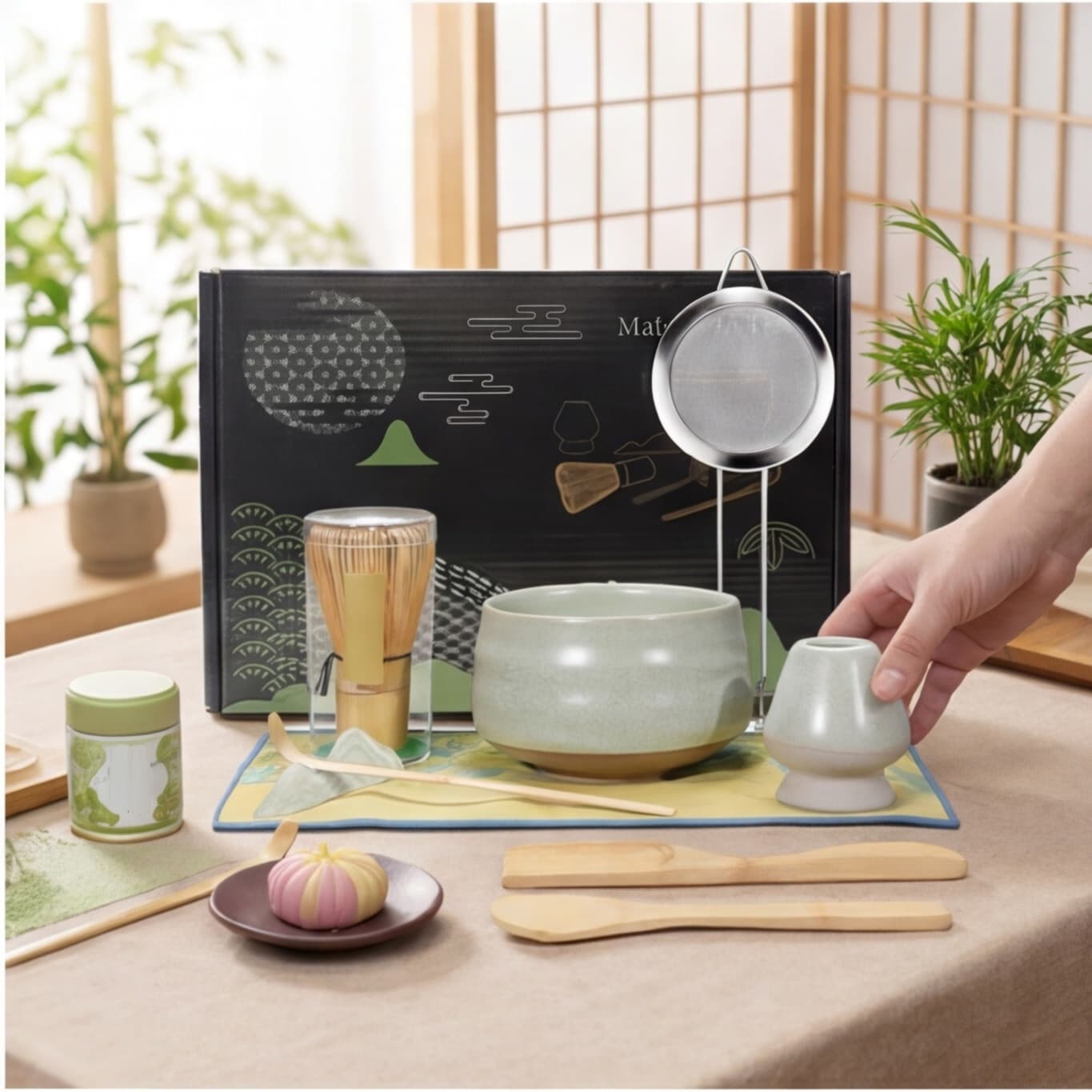
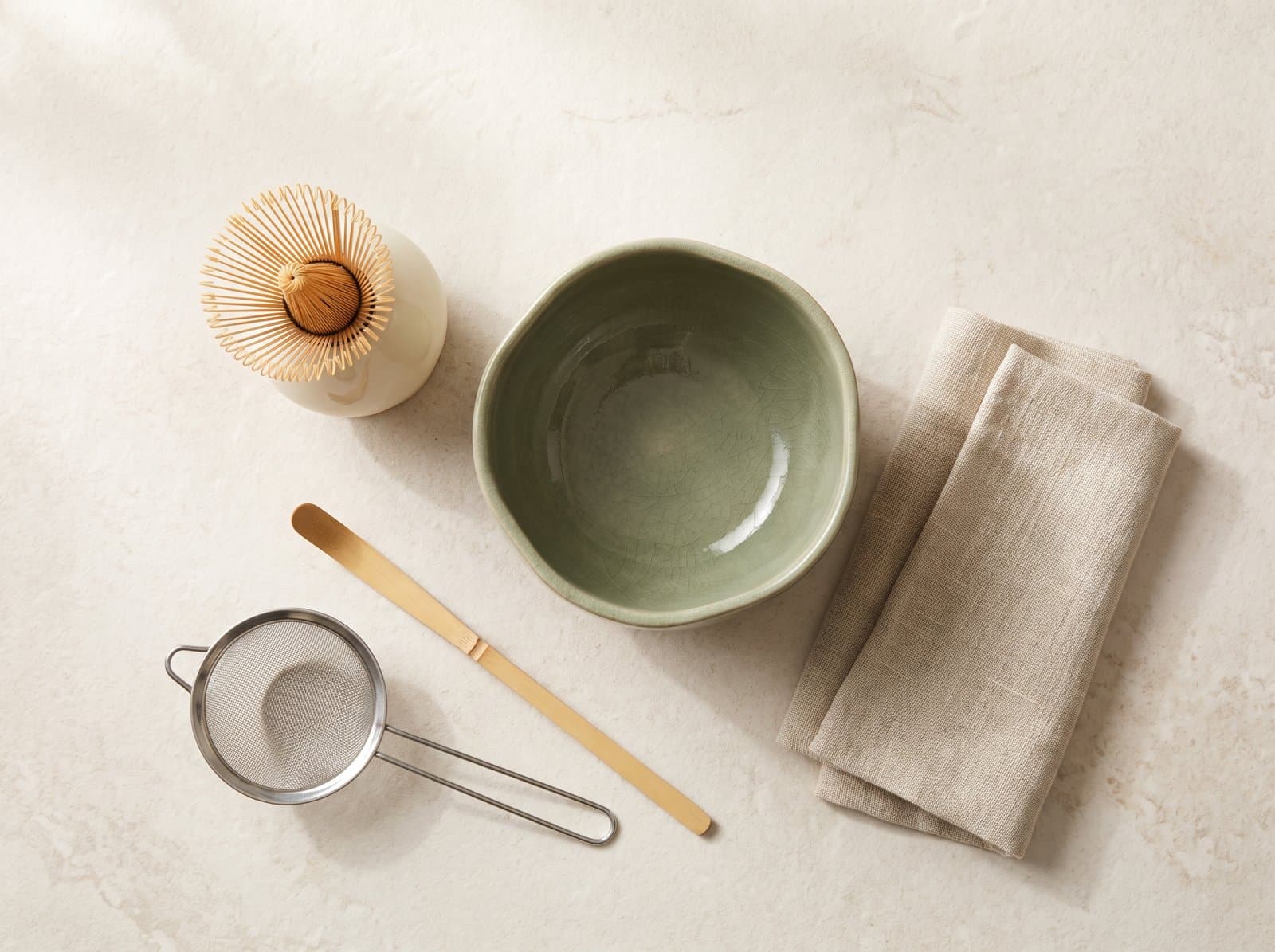
Everything the matcha ritual asks for.
Bowl, whisk, scoop, sifter, and rest — photographed exactly as they arrive.