23 October 2026 · 9 min read
Best Container for Storing Matcha Powder
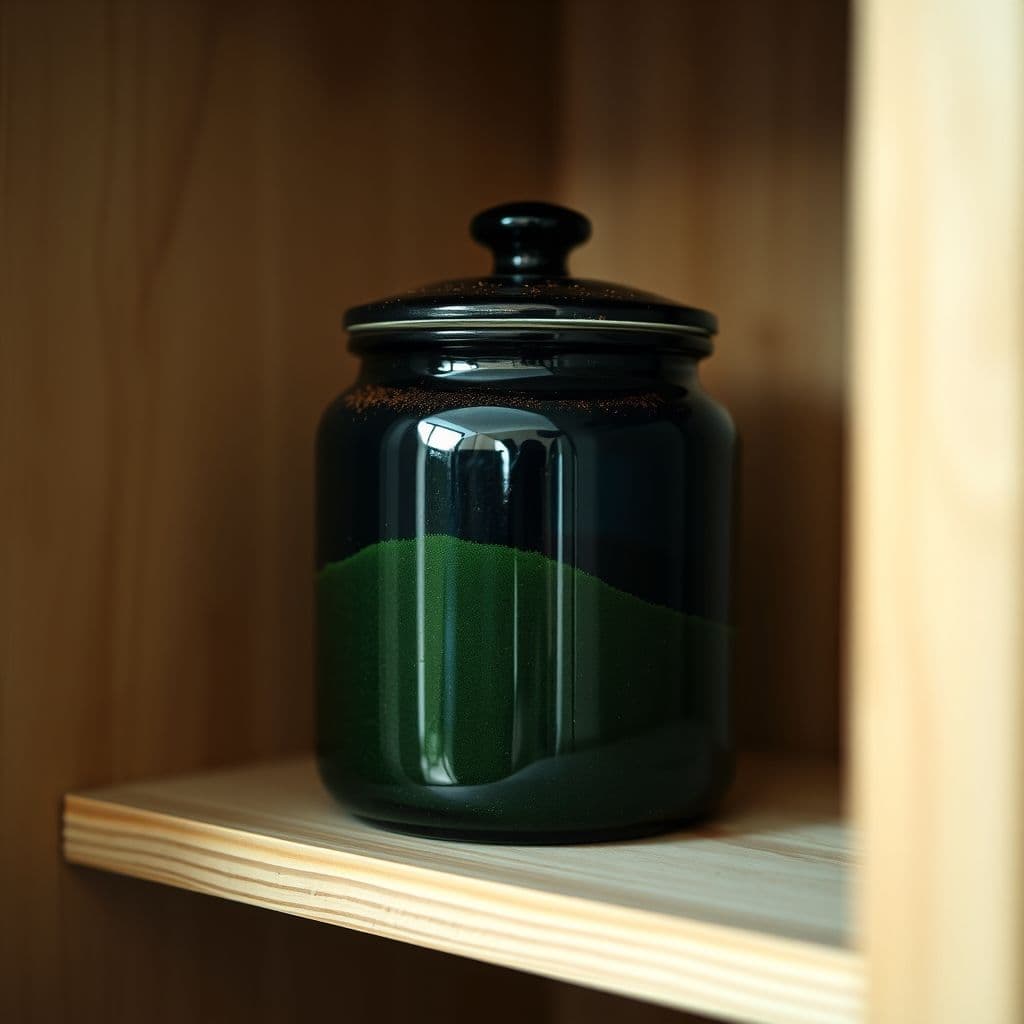
The Best Container for Storing Matcha Powder
The best container for storing matcha powder is a small, opaque, airtight canister made of ceramic or dark glass. These materials offer the best protection against the elements that quickly degrade matcha's unique flavor, color, and beneficial compounds.
Matcha is a delicate product. Unlike other teas, it is a fine powder. This means it has a much larger surface area exposed to air, light, and moisture. Proper storage is not optional; it is essential for maintaining the quality you pay for.
Why Matcha Needs Specific Storage
Matcha's vibrant green color and distinct umami flavor are fragile. Several environmental factors accelerate its degradation. Understanding these threats helps you choose the right storage solution.
Light Exposure
Light is matcha's enemy. UV rays and even ambient room light break down chlorophyll, the compound responsible for matcha's bright green color. This process also degrades L-theanine, an amino acid contributing to matcha's smooth taste and calming effects. Exposure to light causes matcha to turn a dull, yellowish-brown and develop a bitter taste.
Oxygen and Air
Oxygen causes oxidation. When matcha powder is exposed to air, the delicate compounds within it begin to oxidize. This process rapidly diminishes its fresh, grassy aroma and leads to a stale, flat taste. An airtight seal is crucial to prevent oxygen from reaching the powder.
Moisture
Moisture is another significant threat. Matcha powder is highly hygroscopic, meaning it readily absorbs moisture from the air. Even small amounts of humidity can cause the powder to clump, lose its fine texture, and become difficult to whisk smoothly. Worse, moisture can promote the growth of mold, rendering the matcha unusable.
Heat
High temperatures accelerate all degradation processes. Just as heat can spoil food faster, it speeds up the breakdown of matcha's delicate compounds. Storing matcha in a cool environment, away from direct heat sources like stoves or sunny windows, is vital for preserving its freshness.
Strong Odors
Matcha powder can absorb strong odors from its surroundings. If stored near coffee, spices, or other aromatic foods, it can pick up these smells, altering its natural flavor profile. A non-reactive container with a tight seal helps protect the matcha from unwanted external aromas.
The Ideal Matcha Container: Key Features
Given matcha's vulnerabilities, an ideal storage container must possess specific characteristics. These features work together to create a protective environment for the delicate powder.
Opaque Material
The container must be opaque to block light. This means no clear glass or translucent plastic. Dark ceramic or dark, non-transparent glass are excellent choices. If using a metal tin, ensure it is completely solid and does not allow any light to pass through.
Airtight Seal
An airtight seal is non-negotiable. The lid should fit snugly and create a vacuum or a very tight barrier against air. Look for containers with silicone gaskets, rubber seals, or clamp-down lids. A simple twist-on lid may not be sufficient unless it has an internal sealing mechanism.
Small Volume
Choose a container that is appropriately sized for the amount of matcha you store. A large container with a small amount of matcha leaves too much air inside, even if sealed. This excess air still contains oxygen. Opt for a container that is just large enough to hold your matcha with minimal empty space.
Non-Reactive Material
The container material should not react with the matcha powder or impart any flavors. Ceramic, glass, and food-grade stainless steel are generally safe. Avoid plastics that might leach chemicals or absorb odors over time. If using a metal tin, check that it has an inert lining to prevent metallic tastes.
Common Container Types: Pros and Cons
Different types of containers offer varying levels of protection. Here is a look at common options and their effectiveness for matcha storage.
Original Foil-Lined Bags
Most matcha, like Ceremonial Matcha 100g or Organic Matcha Powder 250g, arrives in a resealable, foil-lined bag. These bags are opaque and provide good initial protection when unopened. The foil lining acts as a barrier against light and air.
- Pros: Opaque, often resealable, lightweight, convenient for initial purchase.
- Cons: The resealable zipper often does not create a true airtight seal after multiple openings. The flexible nature of the bag allows air to remain inside, and it can be easily punctured. They offer less structural protection against accidental crushing.
- Recommendation: Use the original bag for short-term storage, but for longer freshness, especially for an opened bag, transfer the matcha to a more robust container. You can also place the entire opened bag inside a larger airtight container for an extra layer of protection.
Ceramic Canisters
Ceramic containers are a top choice for matcha storage. They are aesthetically pleasing and highly functional.
- Pros: Completely opaque, non-reactive, excellent at blocking light. Ceramic also provides good insulation against minor temperature fluctuations. With a proper lid (often bamboo with a silicone seal or a ceramic lid with a gasket), they can be very airtight.
- Cons: Can be fragile and break if dropped. Can be heavier than other options.
- Recommendation: A ceramic canister with a tight-fitting, gasket-sealed lid is one of the best choices for daily matcha storage.
Dark Glass Jars
While clear glass is unsuitable, dark-colored glass jars (e.g., amber, cobalt blue, or black) can be effective.
- Pros: Non-reactive, easy to clean, and can be very airtight if the lid has a good seal (e.g., clamp-top jars with rubber gaskets). Dark glass blocks a significant amount of light.
- Cons: Not all dark glass is equally effective at blocking all light wavelengths. They can also be fragile. Transparent or lightly tinted glass should never be used.
- Recommendation: If you choose dark glass, ensure it is truly opaque to light. Test it by shining a flashlight through it. If light passes through, it is not suitable.
Metal Tins (e.g., Stainless Steel, Aluminum)
Metal tins are common for many teas and can work for matcha if chosen carefully.
- Pros: Opaque, durable, lightweight. Many come with tight-fitting lids.
- Cons: Some metals can react with matcha over time, potentially imparting a metallic taste. Look for tins that are lined with an inert material (like food-grade lacquer) to prevent this. The airtightness varies greatly depending on the lid design; some are merely slip-on, which are not airtight enough.
- Recommendation: If using a metal tin, ensure it has a proper inner lining and a lid with a robust airtight seal, such as a double lid or a screw-top with a gasket.
Vacuum-Sealed Containers
These containers remove most of the air, creating a strong vacuum seal.
- Pros: Excellent at preventing oxidation by removing oxygen.
- Cons: Can be expensive. The process of vacuum-sealing might compact the delicate matcha powder, which some prefer to avoid. They are often larger than necessary for typical matcha quantities.
- Recommendation: While effective, a simple, good-quality airtight container is often sufficient and more practical for most home users. Vacuum sealers might be an option for very large quantities of matcha intended for long-term storage, but they are generally overkill for a 100g or 250g supply.
Fridge and Freezer Storage: When and How
For extending the life of matcha, especially larger quantities or unopened packages, refrigeration or freezing can be beneficial. However, these methods require strict adherence to specific steps to prevent moisture damage.
Refrigeration (Fridge)
Storing matcha in the refrigerator slows down the degradation process. The cooler temperatures keep the powder fresher for longer than room temperature storage.
- When to use: For opened matcha that you plan to consume over several weeks, or for unopened matcha you want to keep fresh for an extended period before opening.
- How to do it:
- Place your matcha in a truly airtight, opaque container. This is non-negotiable. Any moisture from the fridge will ruin the matcha if the seal is compromised.
- Before opening the container, allow it to come to room temperature for at least an hour. This prevents condensation from forming on the cold powder when exposed to warmer, humid air. Condensation introduces moisture, which can spoil the matcha.
- After scooping, reseal the container tightly and return it to the fridge promptly.
Freezing
Freezing offers the longest storage duration for matcha, ideal for very large quantities or for unopened packages you plan to use much later.
- When to use: For unopened matcha you want to store for many months, or for dividing a very large amount of matcha into smaller, individually sealed portions for future use.
- How to do it:
- Ensure the matcha is in an absolutely airtight, opaque container or a vacuum-sealed bag. Double-bagging in heavy-duty freezer bags can add an extra layer of protection.
- Place the container in the freezer.
- When ready to use, transfer the unopened container from the freezer to the refrigerator for several hours, then to room temperature for at least an hour or two. This gradual warming prevents thermal shock and, more importantly, condensation.
- Only open the container once it has fully reached room temperature.
- Avoid refreezing matcha once it has been thawed and opened.
The biggest risk with both refrigeration and freezing is condensation. Always bring the matcha to room temperature before opening its container to protect the delicate powder from moisture.
Practical Tips for Daily Use and Longevity
Beyond the right container, daily habits also contribute to matcha's freshness. These simple practices help maximize the lifespan of your powder.
Store in a Cool, Dark Place
Even with an opaque container, storing matcha in a cool, dark cupboard or pantry is best. This protects it from ambient light and heat, which are present even in a kitchen with indirect sunlight or from cooking appliances.
Minimize Air Exposure
Every time you open the container, you expose the matcha to fresh air. Be quick when scooping your matcha. Close the lid immediately and tightly after use. If you have a larger quantity of matcha, consider dividing it. Keep a small amount (enough for a week or two) in your daily-use container, and store the rest in a more secure, long-term storage solution like the fridge or freezer.
Use a Dry Scoop
Always use a completely dry scoop or bamboo scoop to take out your matcha. A wet scoop introduces moisture directly into the powder, leading to clumps and potential spoilage. Even a small drop of water can begin the degradation process.
Consume Within a Reasonable Timeframe
Matcha is best enjoyed fresh. While proper storage extends its life, it does not stop degradation entirely. Once opened, aim to consume ceremonial grade matcha within four to eight weeks for optimal flavor and color. Organic Matcha Powder 250g, often used for lattes or baking, may retain its qualities for a bit longer, but freshness is still key.
Avoid Transferring Back and Forth
Once you transfer matcha from its original packaging to a storage container, try to keep it there. Moving it between containers increases exposure to air and potential contaminants. If you split a larger bag, commit each portion to its designated container.
Matcha Quantity and Container Size
The amount of matcha you purchase impacts your storage strategy. Smaller quantities, like Ceremonial Matcha 100g, can be managed with a single, well-chosen container. Larger quantities, such as Organic Matcha Powder 250g, benefit from a more strategic approach.
For 100g or Less
A single, small, opaque, airtight ceramic or dark glass canister is usually sufficient. Choose a container that holds the 100g of powder with minimal empty space to reduce the amount of air inside. If you consume matcha daily, this quantity will likely be used before significant degradation occurs, even at room temperature.
For 250g or More
When dealing with larger quantities, like 250g, consider splitting the matcha. Divide the total amount into smaller, airtight, opaque containers. Keep one container for daily use in your cupboard. Store the remaining sealed containers in the refrigerator or freezer. This method minimizes exposure for the bulk of your matcha, preserving its quality until you are ready to use it.
By splitting larger amounts, you only expose a small portion of your matcha to air and temperature changes each time you prepare a cup. This strategy extends the overall freshness of your purchase significantly.
Common questions
Can I store matcha in its original bag?+
The original foil-lined bag offers initial protection, but its resealable zipper often fails to create a truly airtight seal after opening. Transferring matcha to a rigid, opaque, airtight container is better for long-term freshness.
Is it okay to keep matcha in the fridge?+
Storing matcha in the fridge can extend its freshness, but only if it is sealed in a truly airtight container. Opening a cold container before it reaches room temperature can cause condensation, which spoils the powder.
What material is best for a matcha container?+
Ceramic or dark, opaque glass are excellent choices because they are non-reactive and block light effectively. Metal tins can work if they have a good seal and an inert lining to prevent flavor transfer.
How long does matcha stay fresh once opened?+
Once opened, matcha should be consumed within four to eight weeks for optimal flavor and color. Proper storage in an airtight, opaque container helps maintain its quality during this period.
More matcha guides
The matcha tools for this ritual
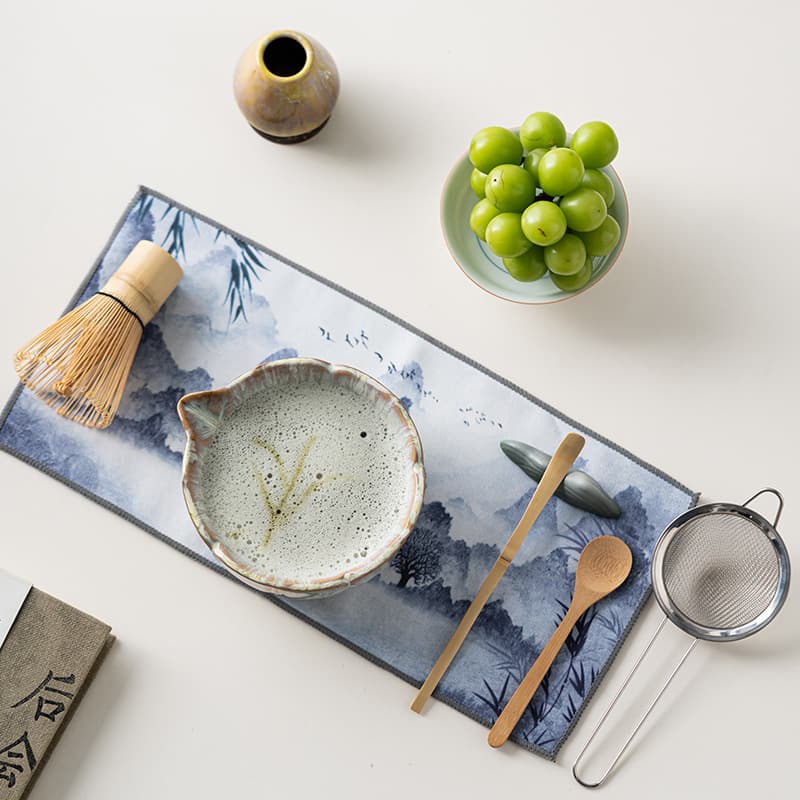
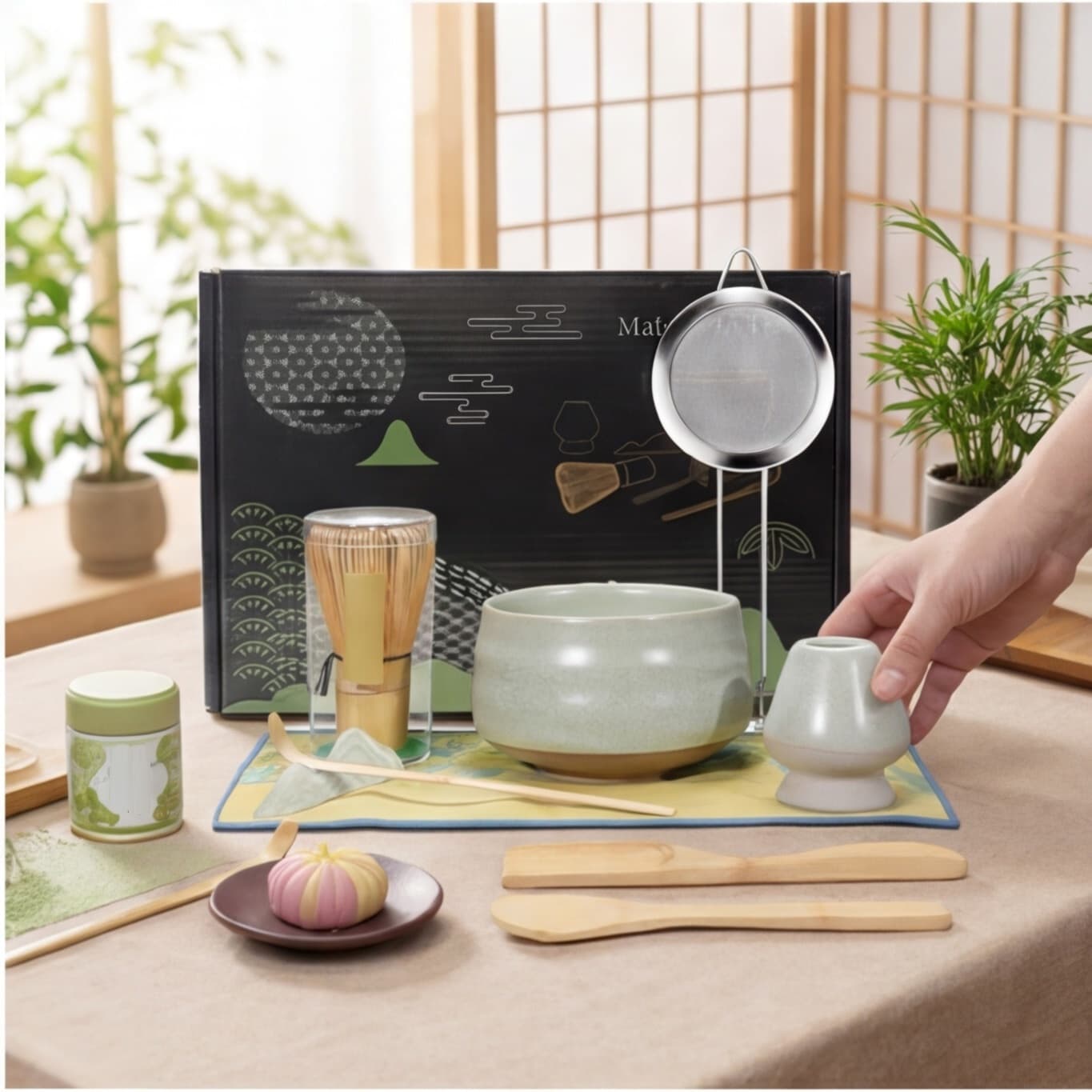
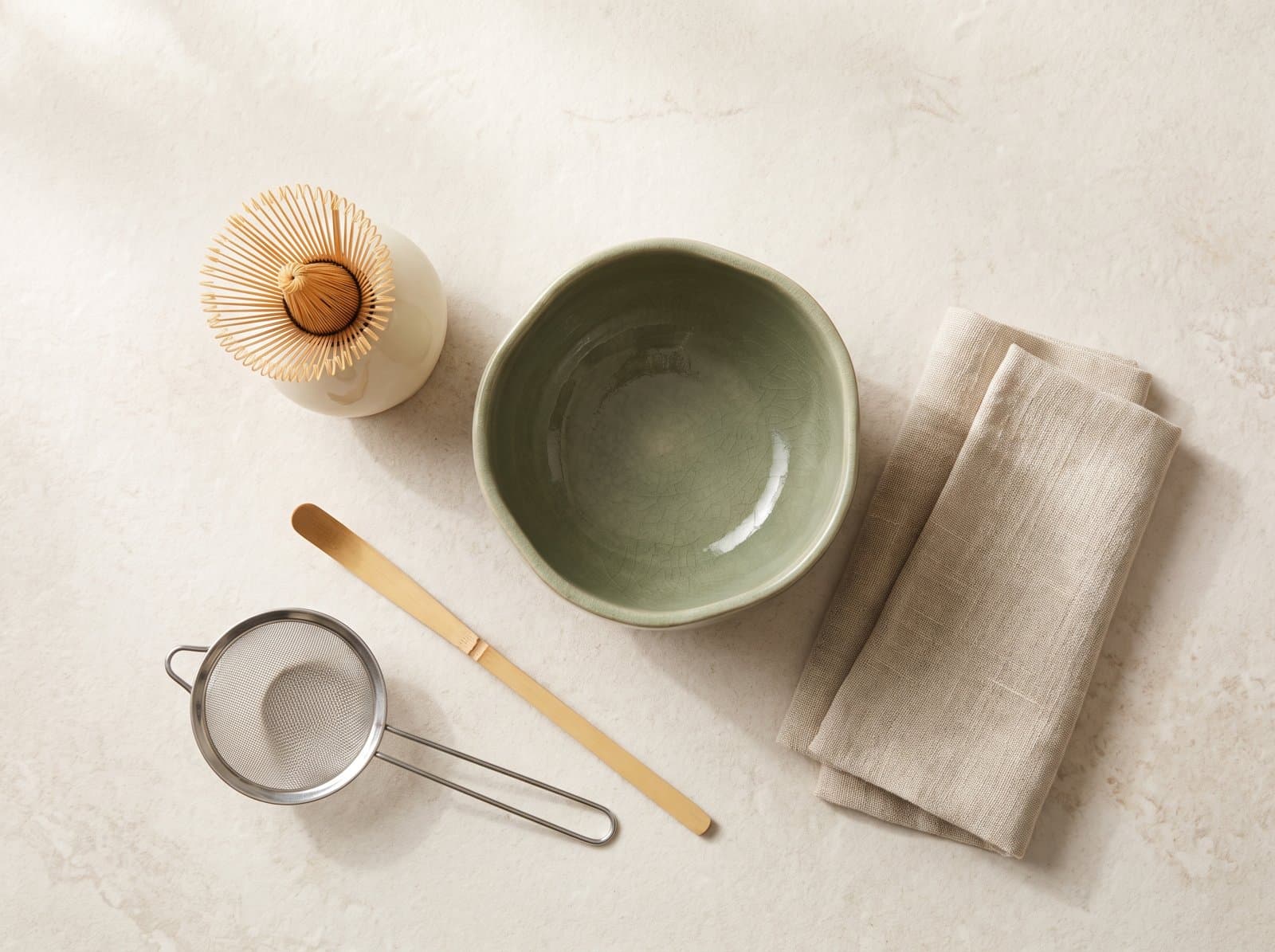
Everything the matcha ritual asks for.
Bowl, whisk, scoop, sifter, and rest — photographed exactly as they arrive.